
Language, Culture & Heritage
Ice Patch Archaeology on Edzi’dzā’e
Tahltan Central Government · October 2026
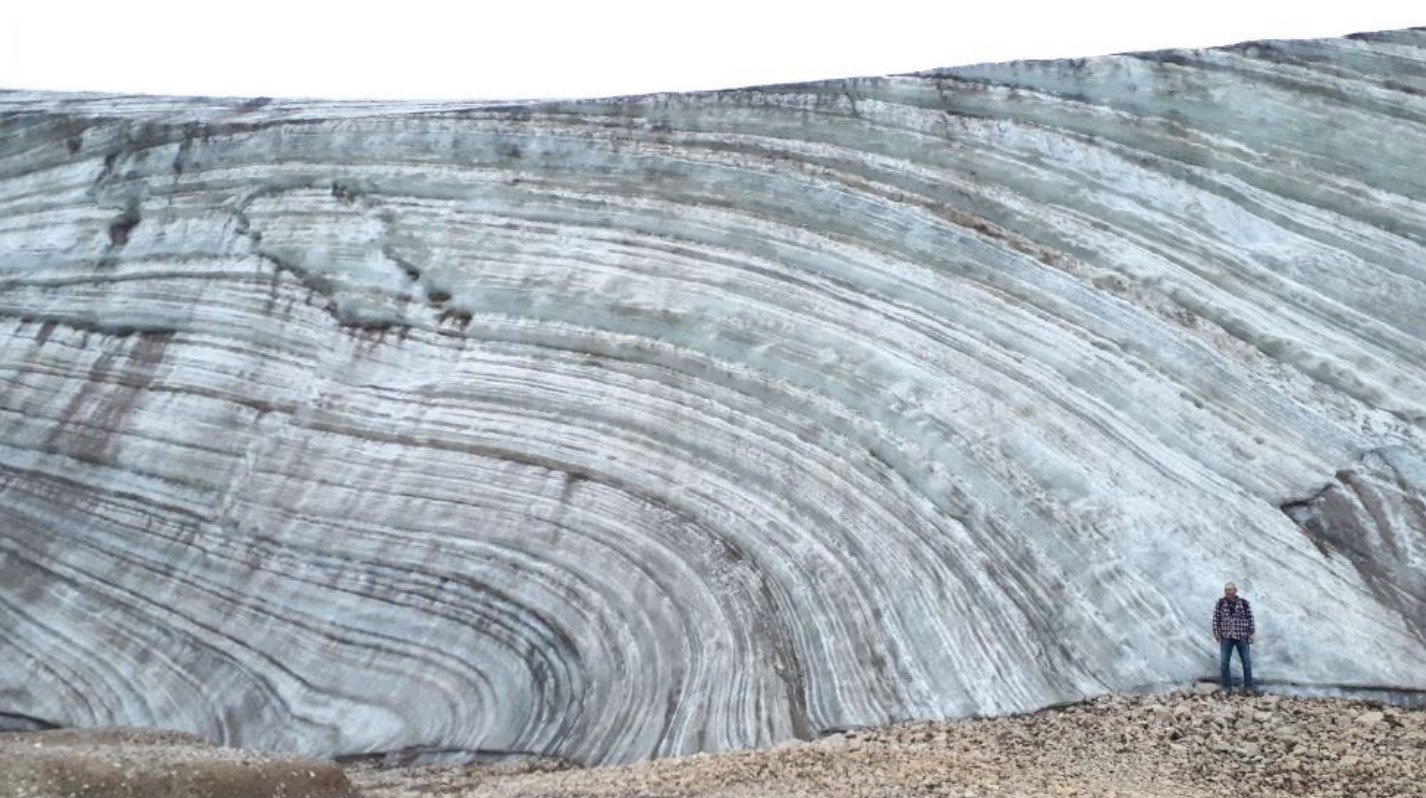
View of convoluted layers in an ice patch with George Dennis. Photo by B. Gray
For over 10,000 years, Tahltans have ventured up onto the plateaus around Mount Edziza or Ice Mountain, to harvest dudāt (obsidian) from naturally occurring flows from volcanic activity. Today’s name for the mountain comes from the Tāłtān Edzi’dzā’e which means sound of walking on hollow lava rocks. We also call it Tenh Dẕetle, Ice Mountain.
Dudāt is a volcanic glass that can be worked into an edge sharper than steel. Tahltan dudāt has a variety of colours, but is known for its mix of greens and black. Our people used dudāt for manufacturing tools, knives, spear blades, arrowheads and more. We traded it as a raw material and also as a finished product. Given obsidian’s great value, it was important that we controlled access to Mount Edziza.
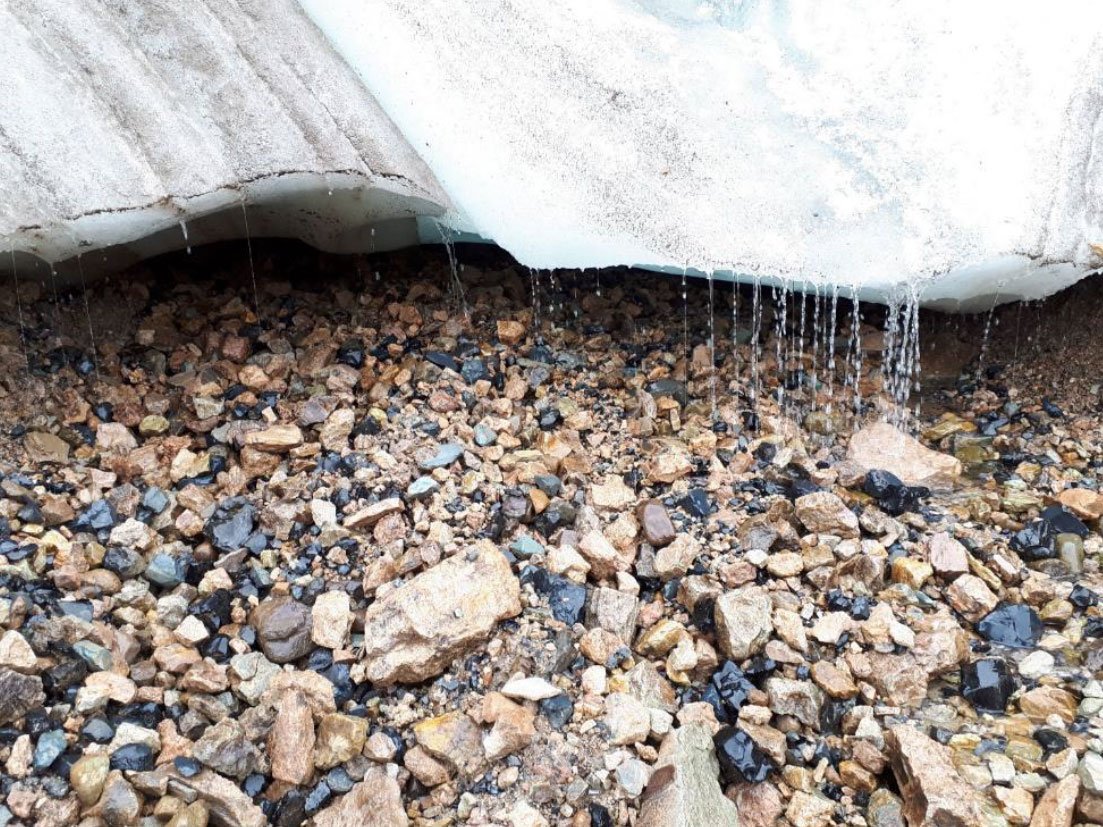
Dudāt cores, flakes and nodules below melting ice. Photo by D. McLaren
We know of ten dudāt flows and archaeologists have found Tahltan quarries at many of them. High on the volcanic massif, at elevations above 1750 meters, the dudāt flows are surrounded by glaciers, perpetual snowfields and great patches of ice. Our ancestors travelled through these areas on their way to and from the dudāt flows, and sometimes lost things. Typically, such ancient items made from wood, animal hide, bone, and antler, would degrade and disappear. But sometimes they got trapped in ice. In the ice, they remained frozen for millennia and preserved. Until now.
“In the ice, they remained frozen for millennia, and preserved. Until now.”
What is Ice Patch Archaeology?
As the climate warms, Edzi’dzā’e’s ice patches have begun to melt. As the ice retreats each summer, it reveals items from our ancestors that are thousands of years old, and highly perishable. To find and learn from and preserve them, we send teams of archaeologists to walk the edge of the ice and search for artifacts.
More from Parks Canada: Ice patch archaeology
For more information
For more information on this work, please contact archaeology@tahltan.org
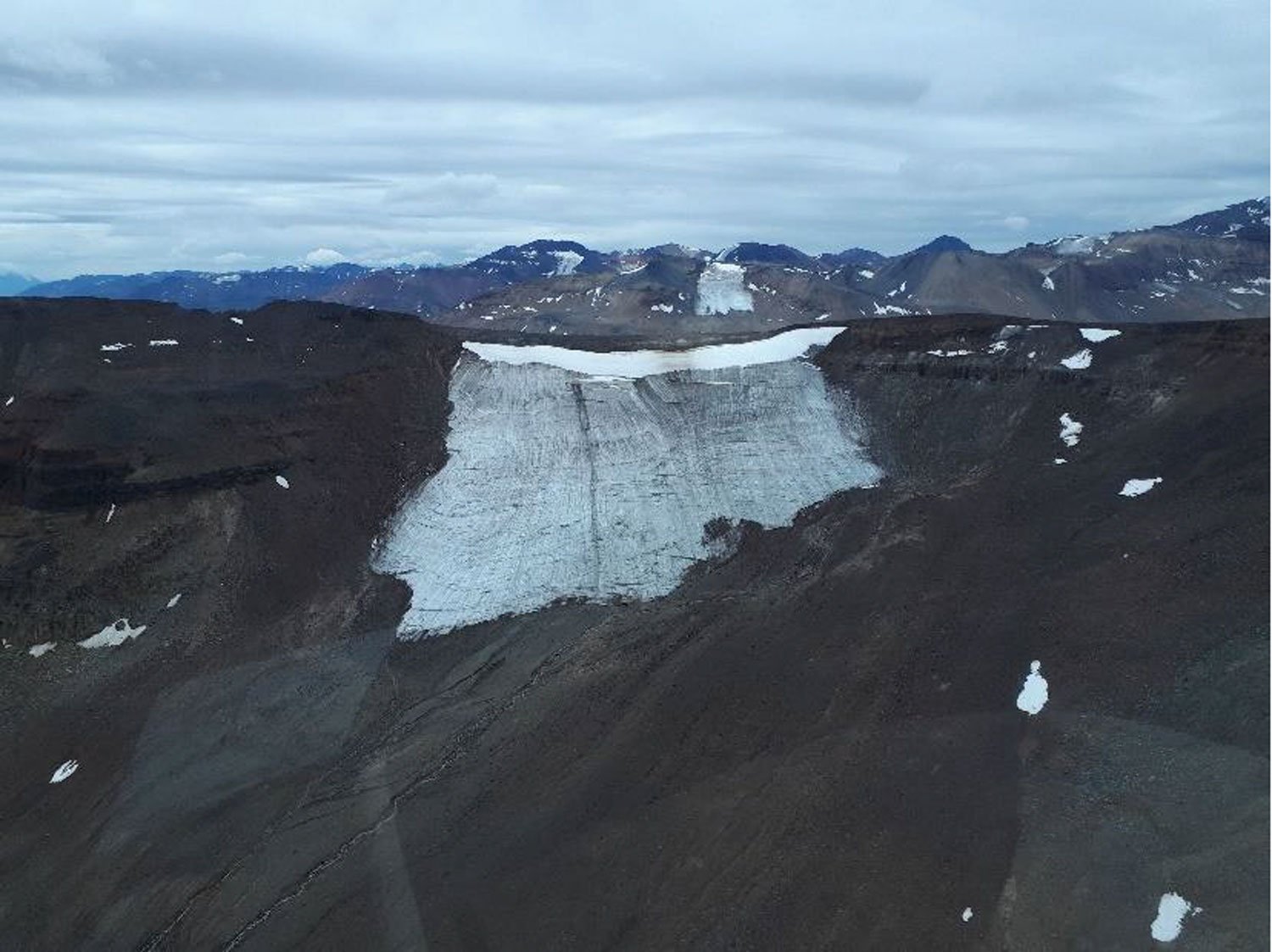
Ice patch below Artifact Ridge.
The archaeological landscape of the Edzi’dzā’e area is extremely significant. Significant impacts to the sites are occurring as a result of warming climatic conditions. It is possible that many of these sites will be completely destroyed if conditions continue to warm.
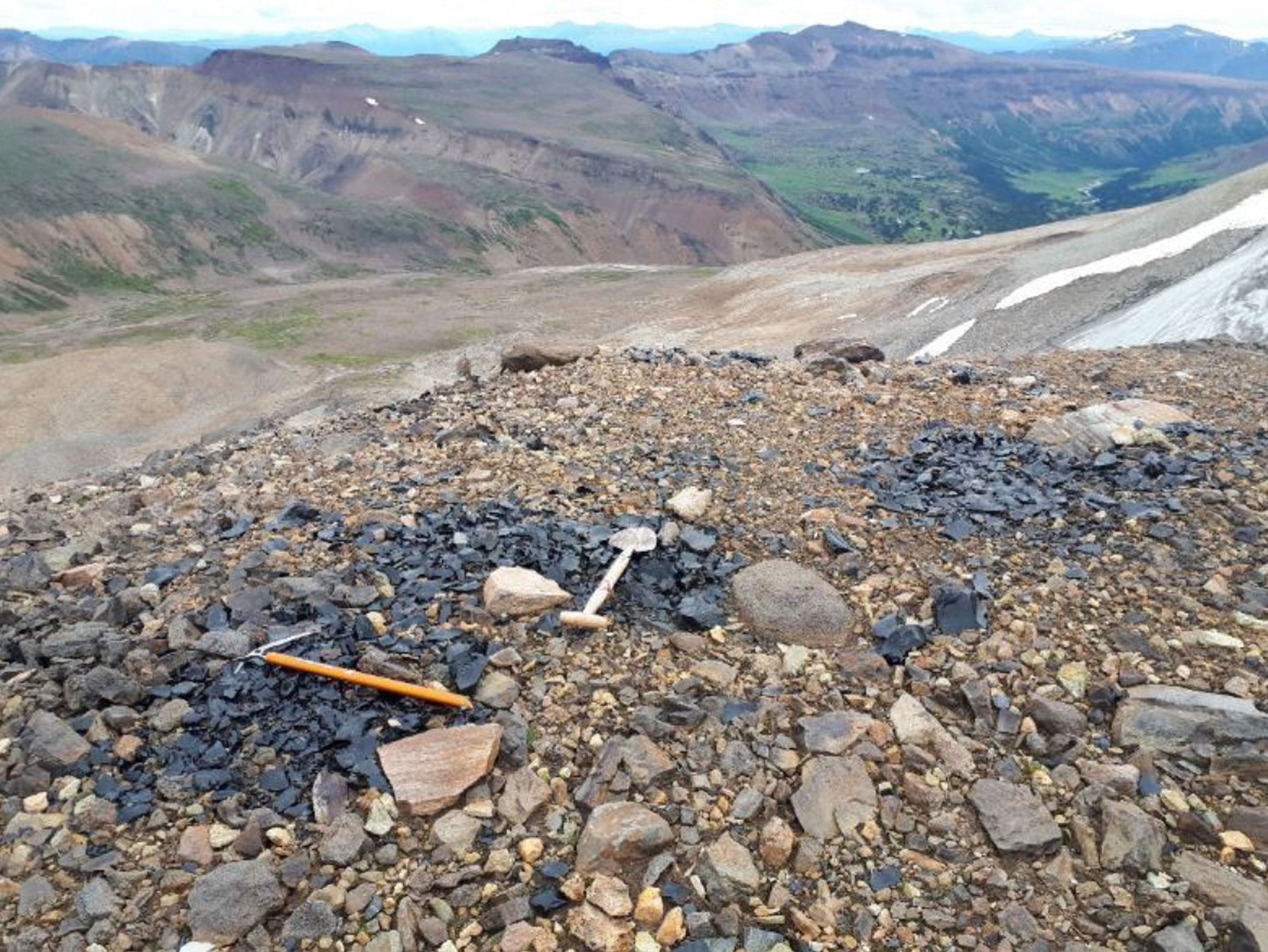
View NE over obsidian work stations and lookout revealed by retreating ice. Photo by Duncan McLaren.

Ice Patch Artifacts
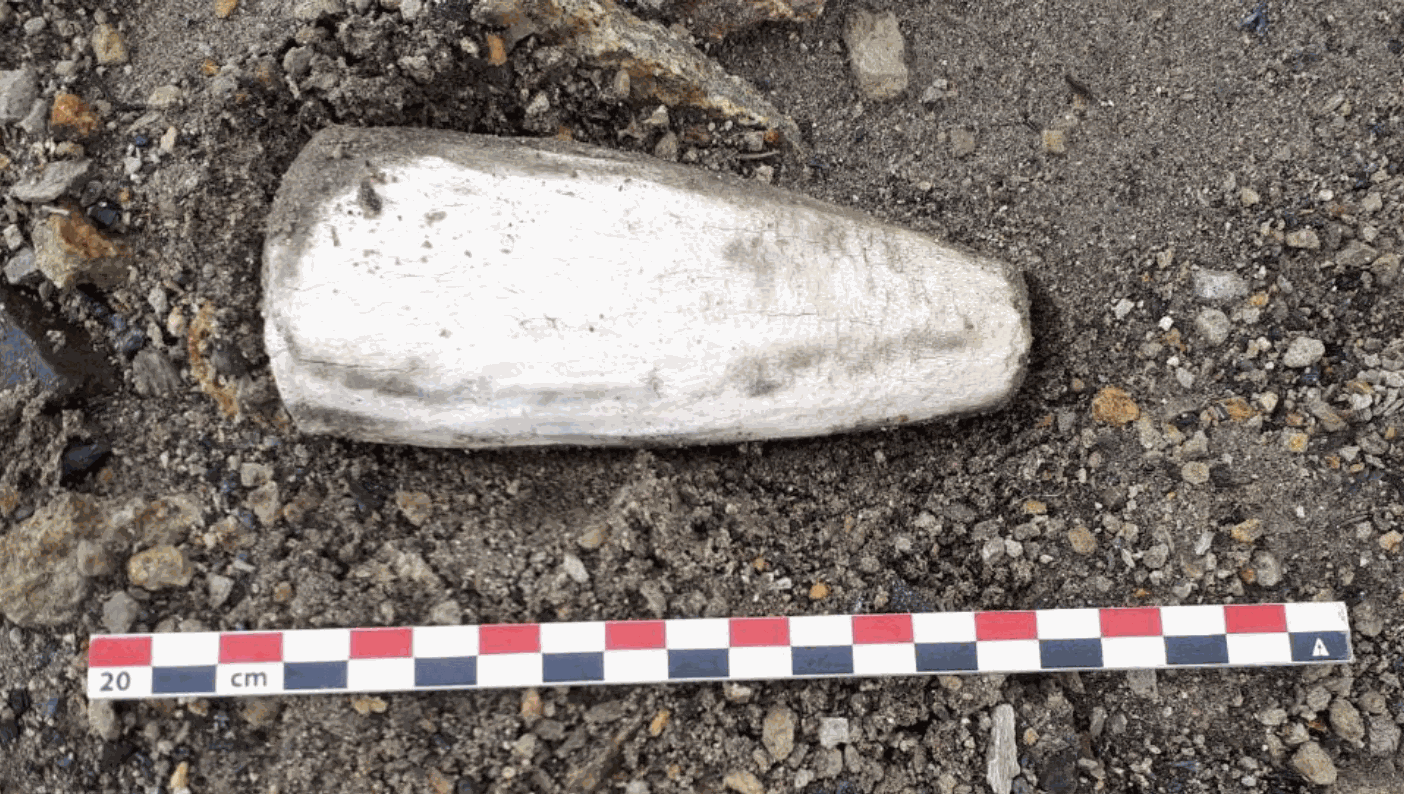
Antler billet found on surface below ice patch . Photo by B. Gray
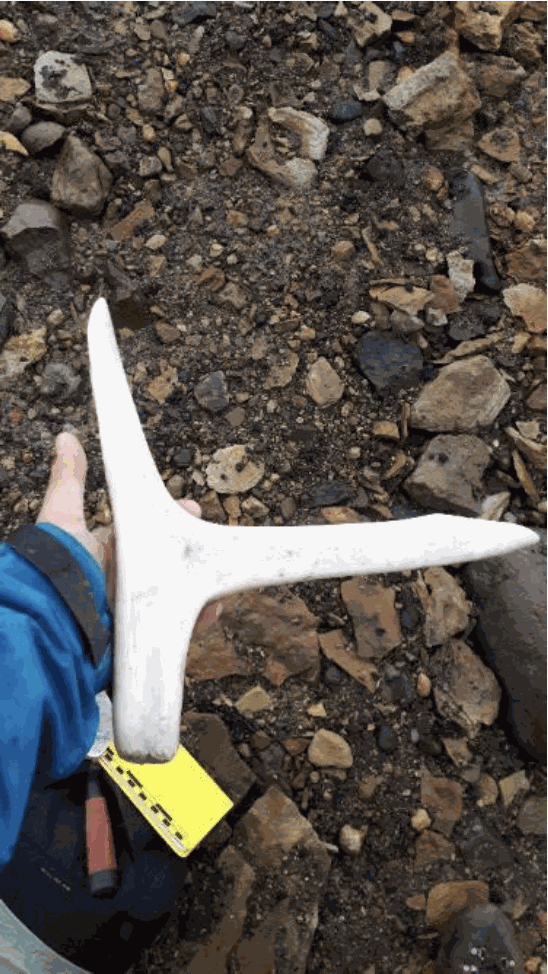
Antler ice pick 5463-5308 years old. Photo by B. Gray
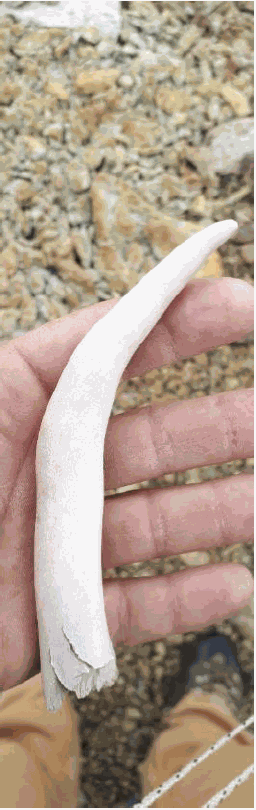
Antler punch. Distal end shows signs of use
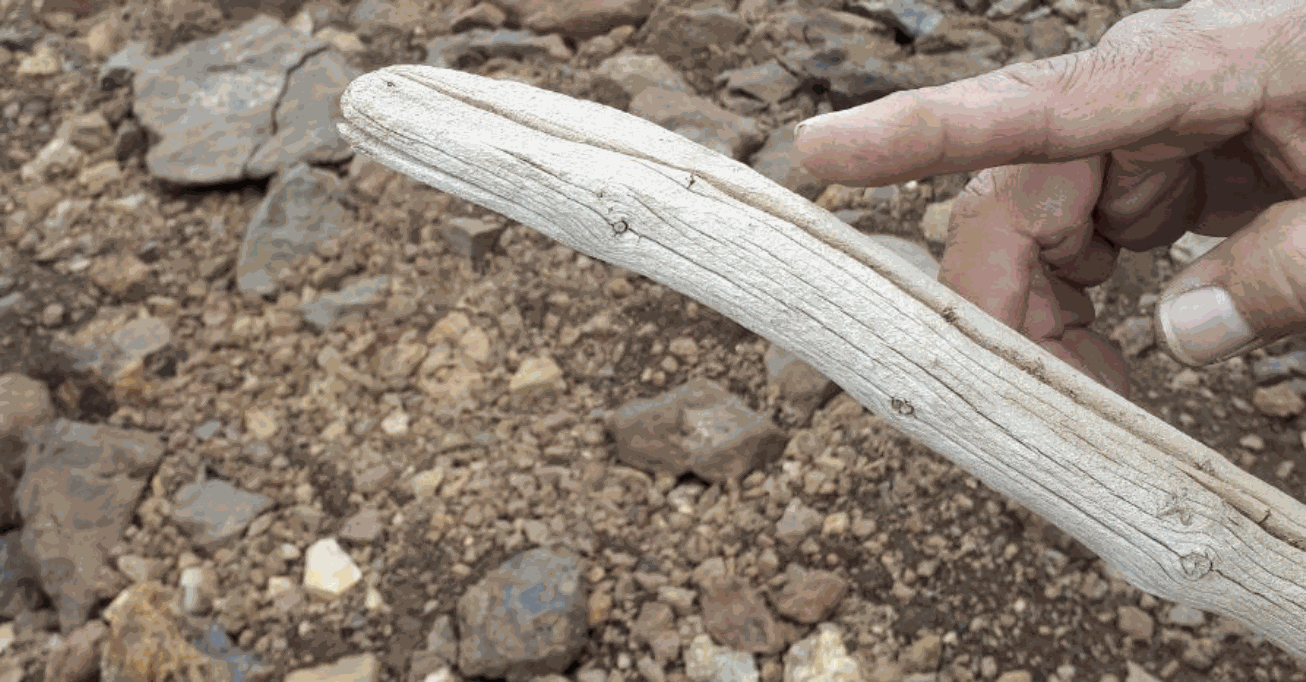
Beveled end of wooden staff dated to 1256-1070 years old. Photo by D. McLaren
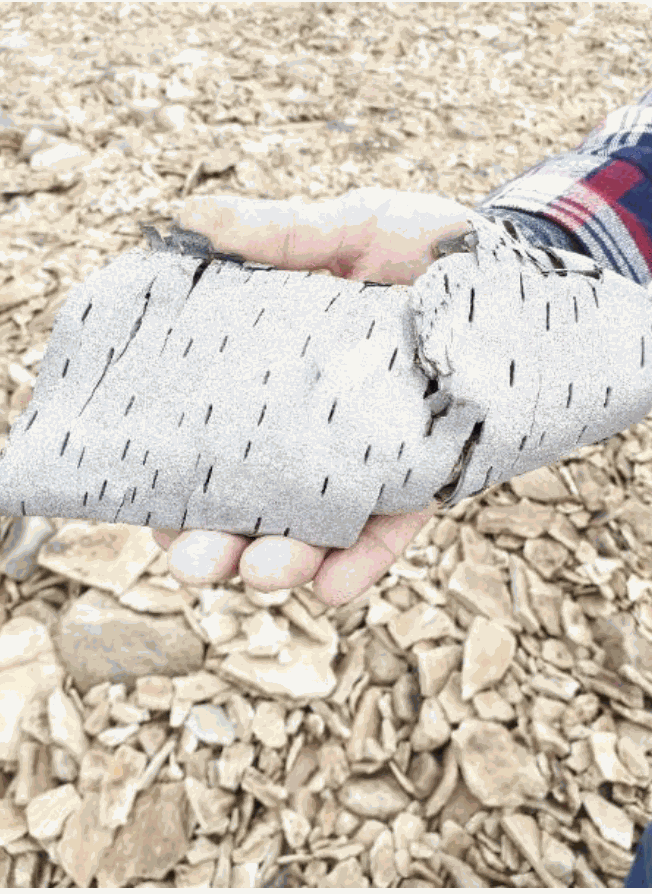
Birch bark container fragment 2306-2062 years old. Photo by D. McLaren
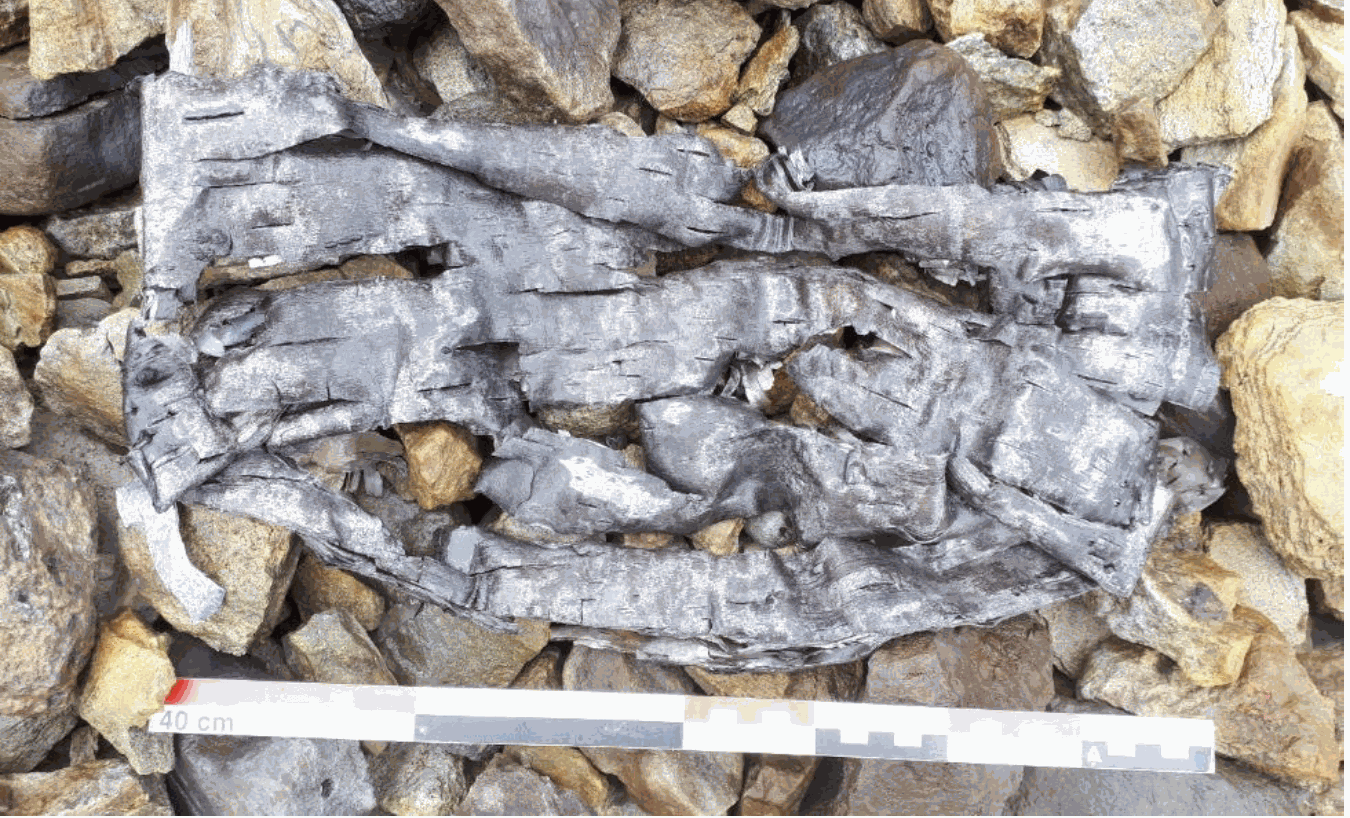
Birch bark container fragment found on surface below ice patch 1612-1448 years old. Photo by B. Gray
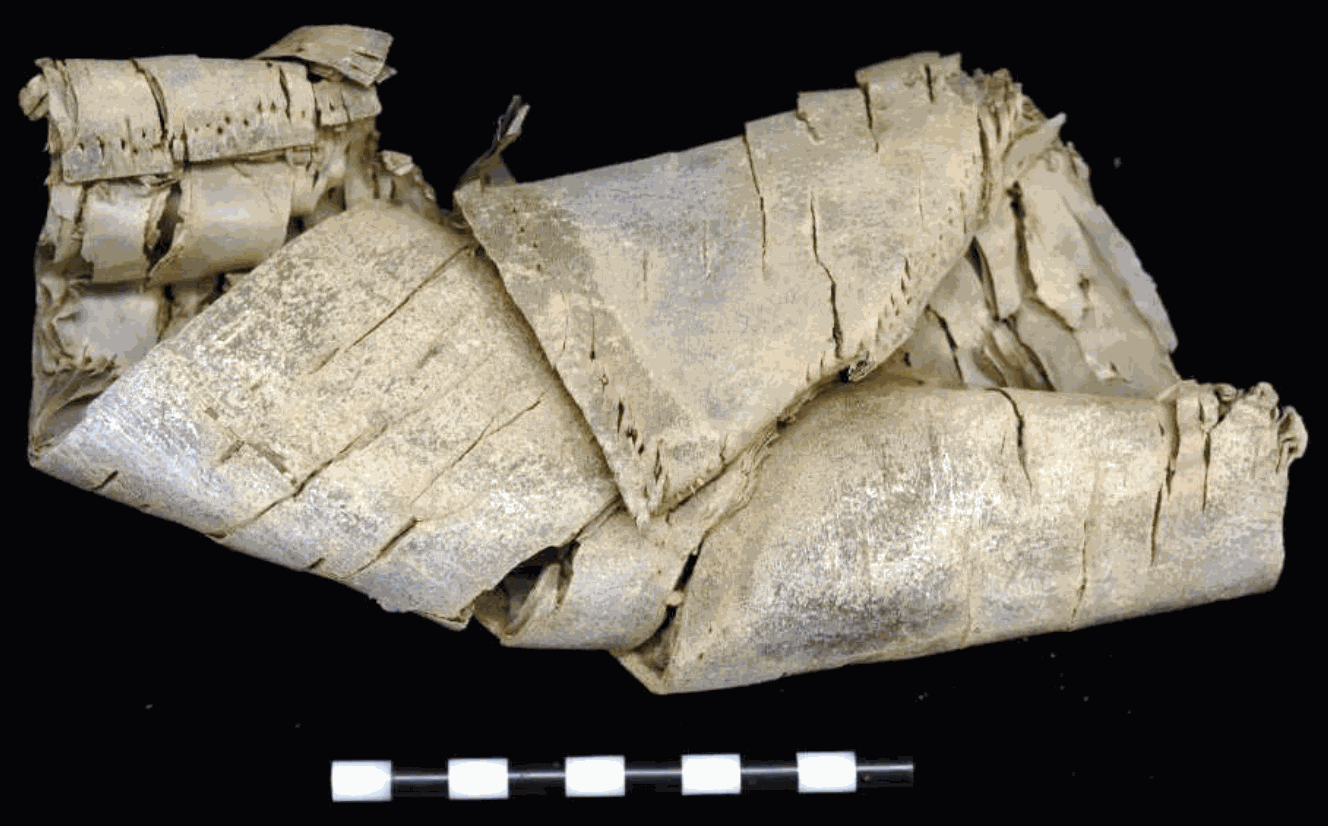
Birch bark container fragment showing stitchery patterns. Photo by G. Hill
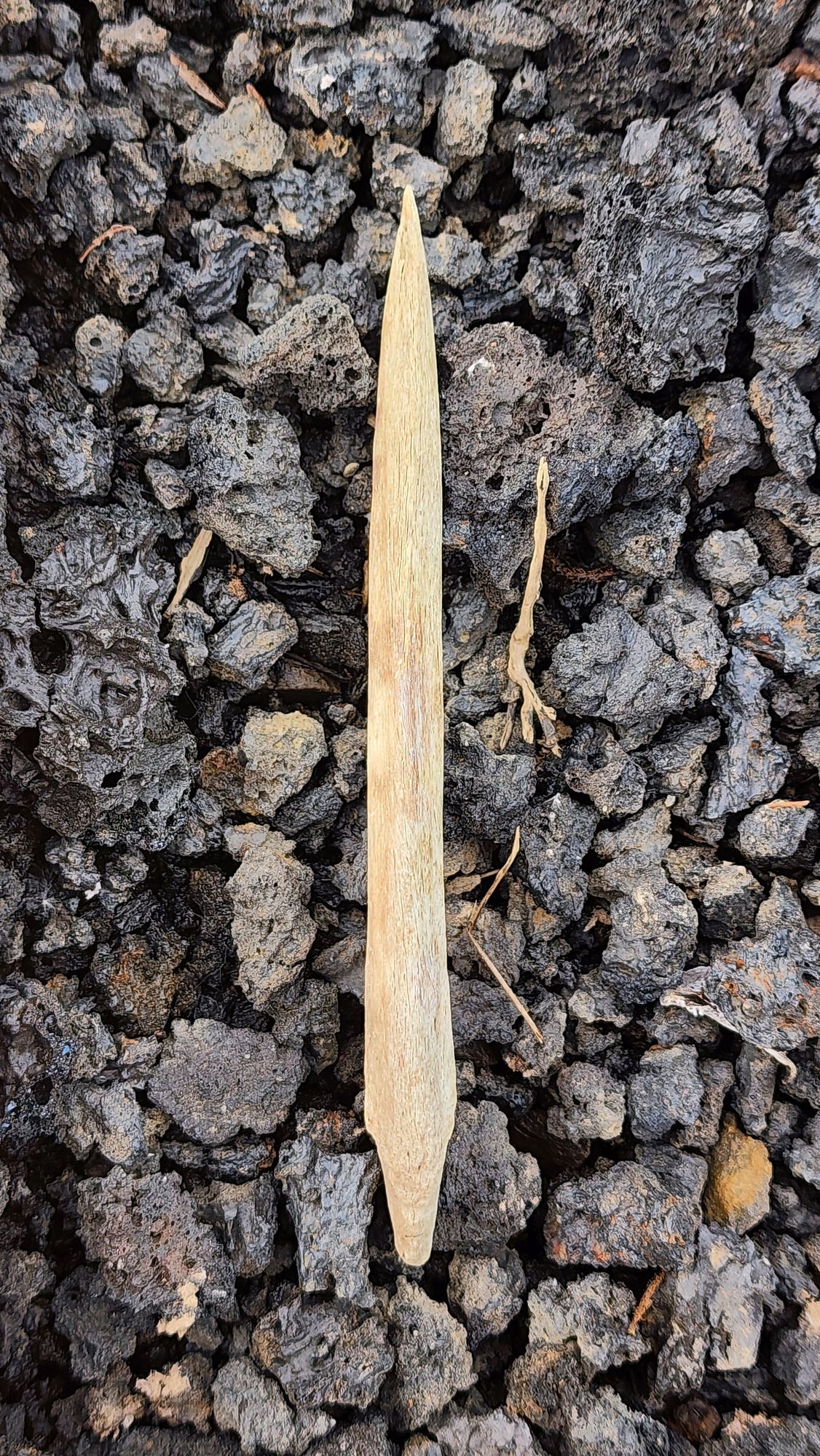
Bone awl or point found on Kitsu Plateau. Note the carved base of the object for fitting into a handle or haft
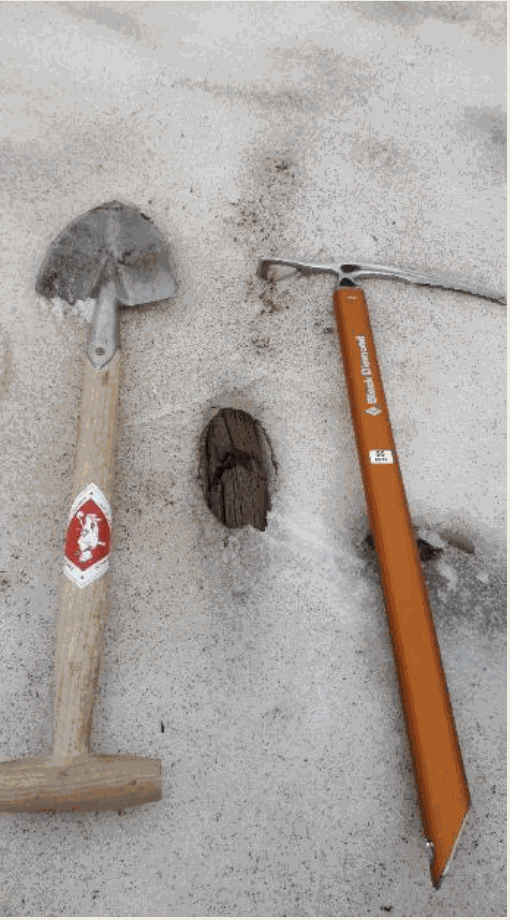
Broken wooden staff found protruding from the edge of a small ice patch. Photo by D. McLaren
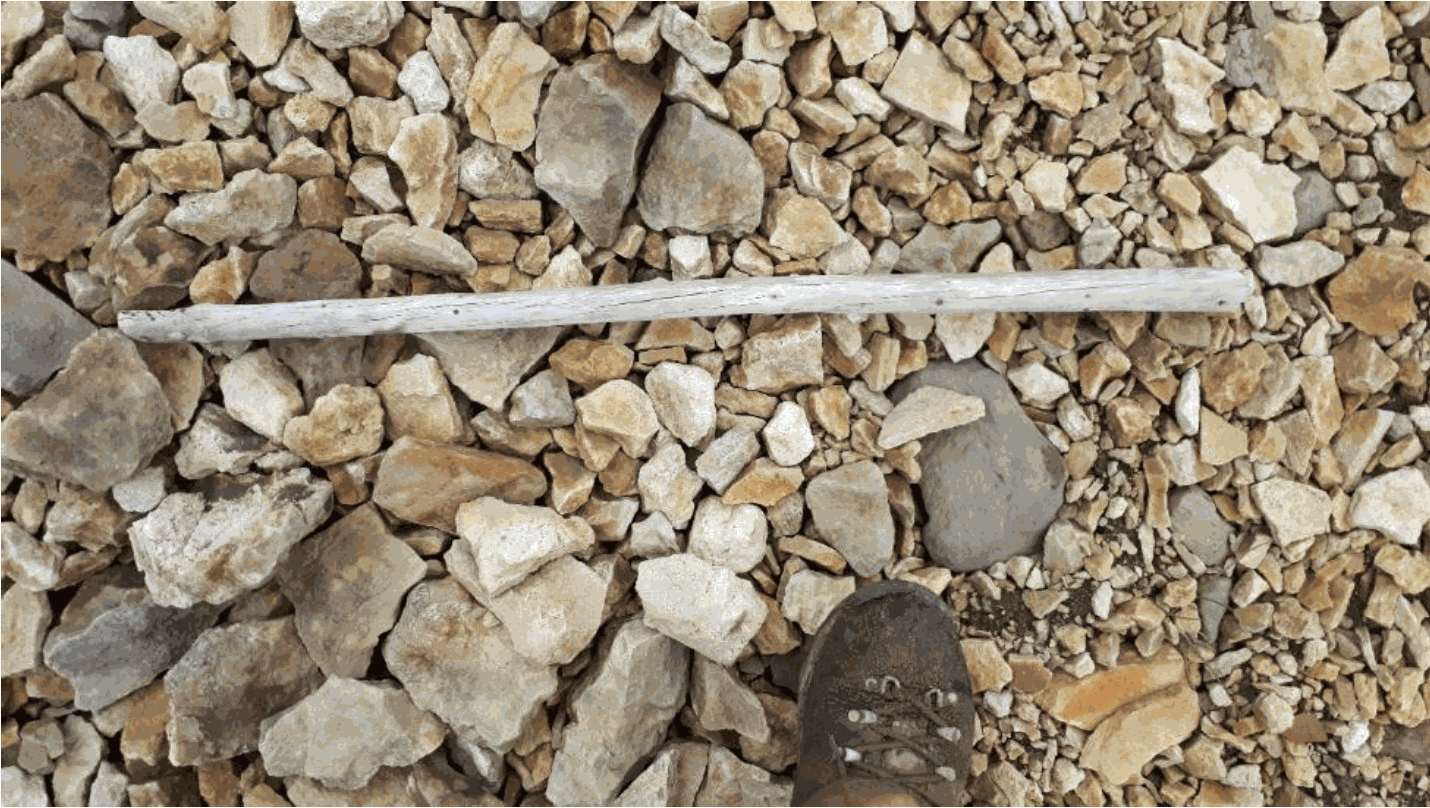
Carved stick on surface. End of stick on right is tapered
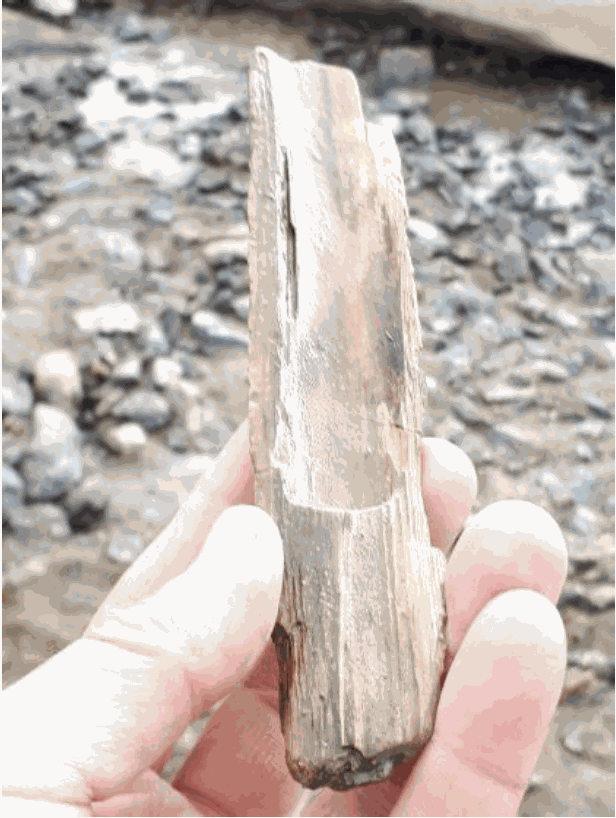
Carved wood, possibly an atlatl board fragment, 1694-1555 years old. Photo by D. McLaren
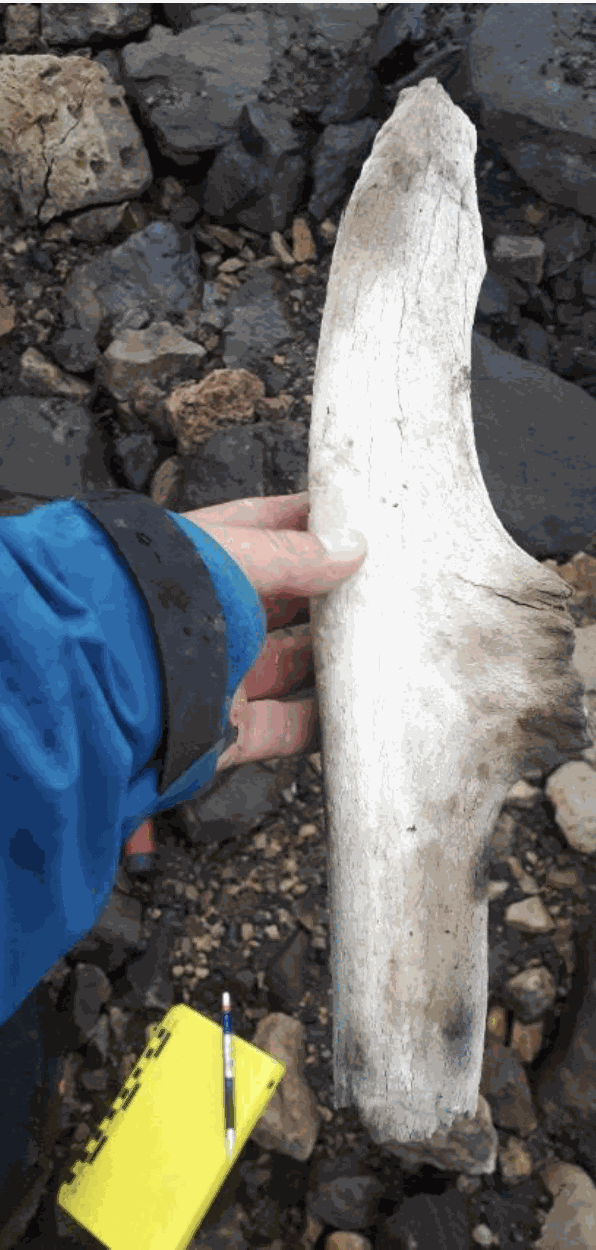
Chopped antler 6883-6745 years old. Chop marks are on at the top end of the artifact
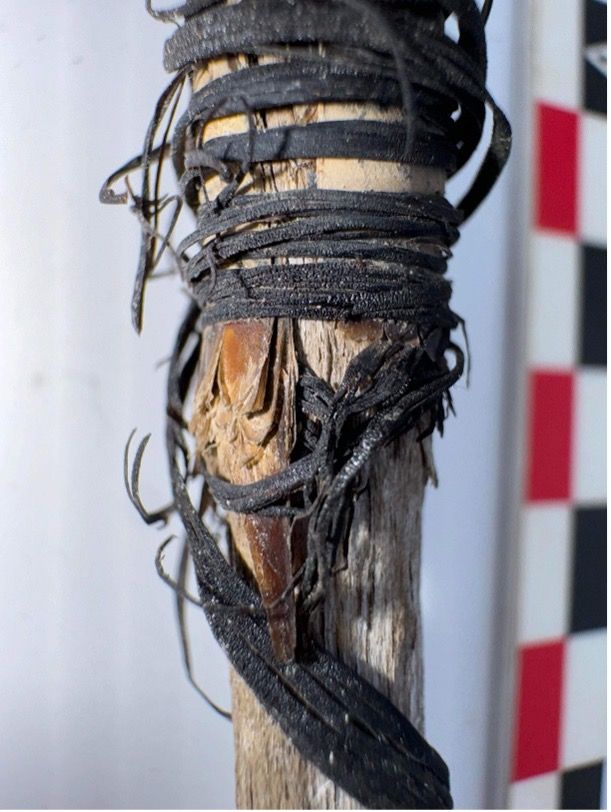
Detail of atlatl dart showing the remains of fletching (feathers) and the wrap used to hold it in place. Found in 2024
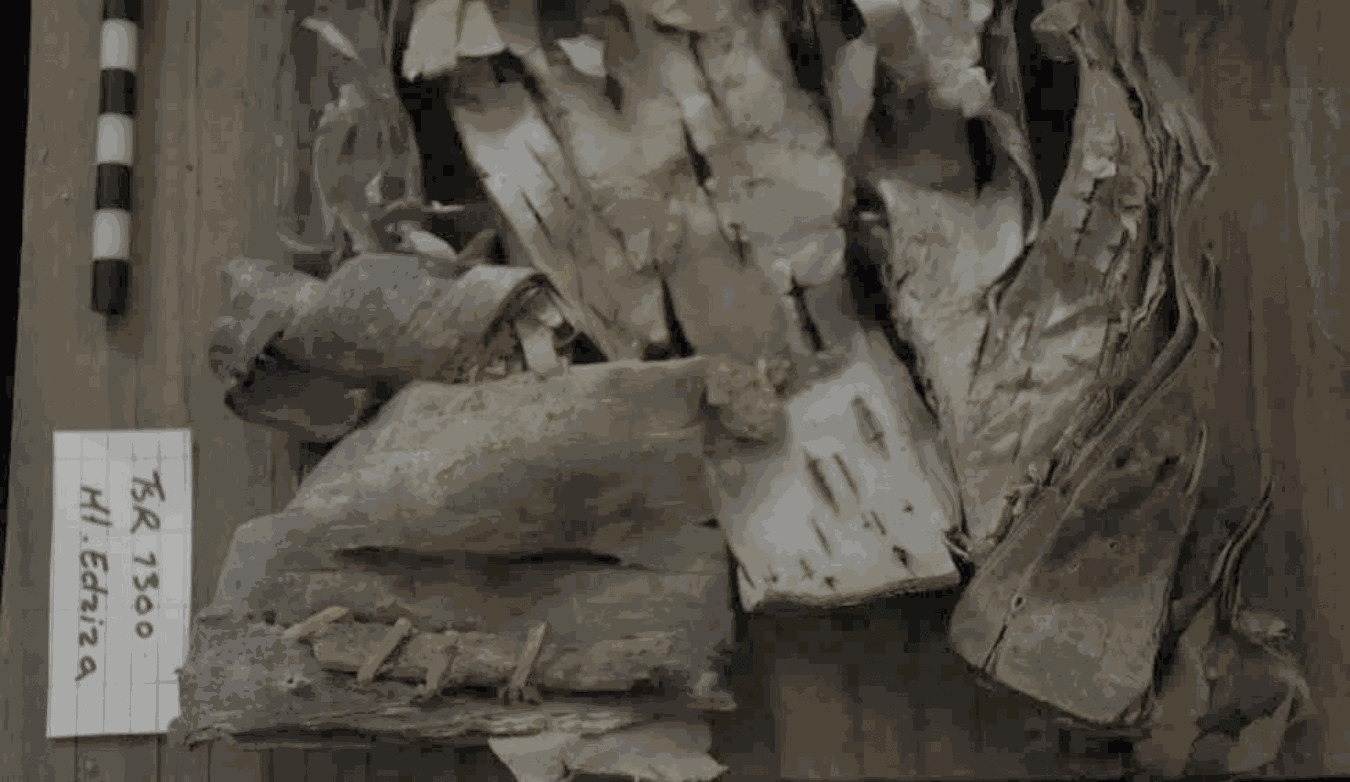
Detail of birch bark container showing stitched structural element. Photo by G. Hill
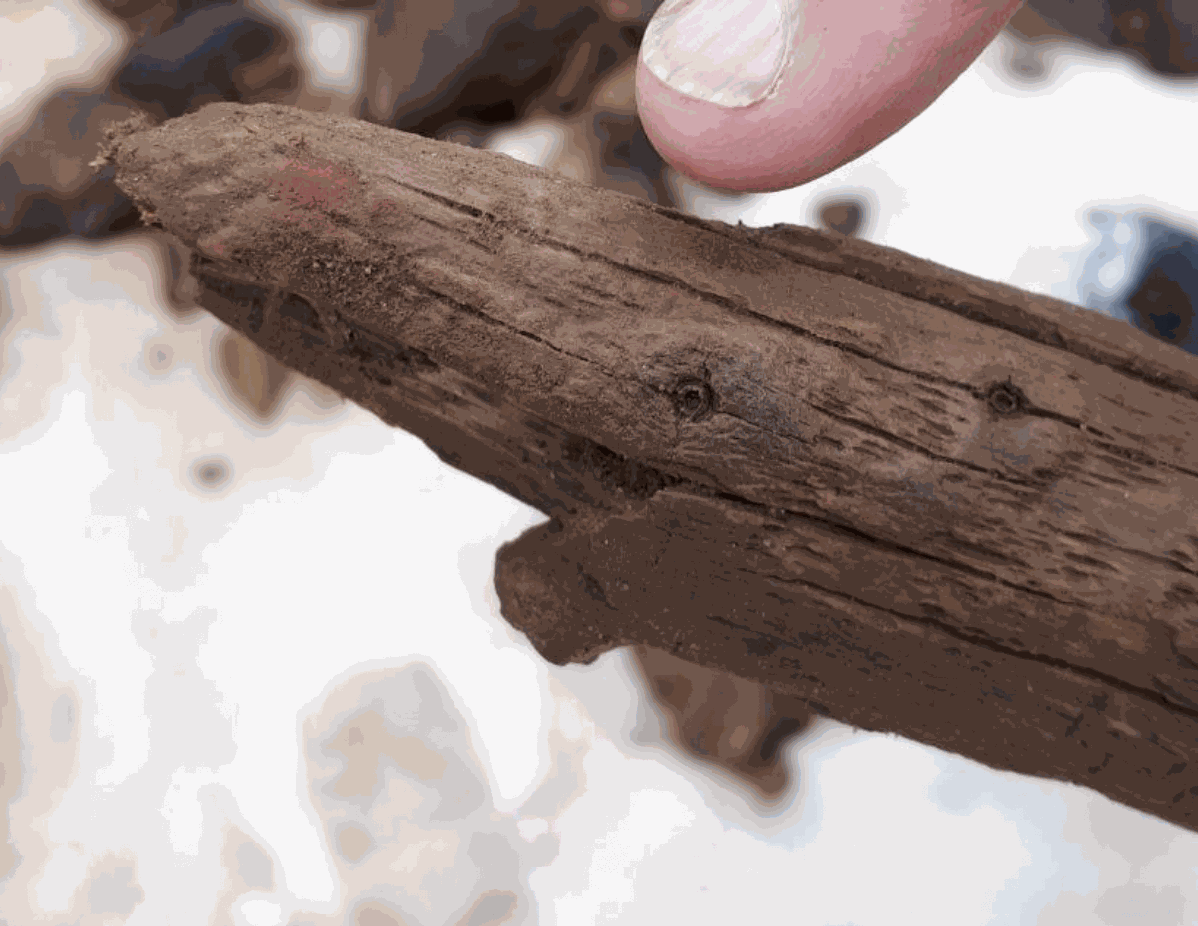
Detail of carved end of wooden artifact with red pigment
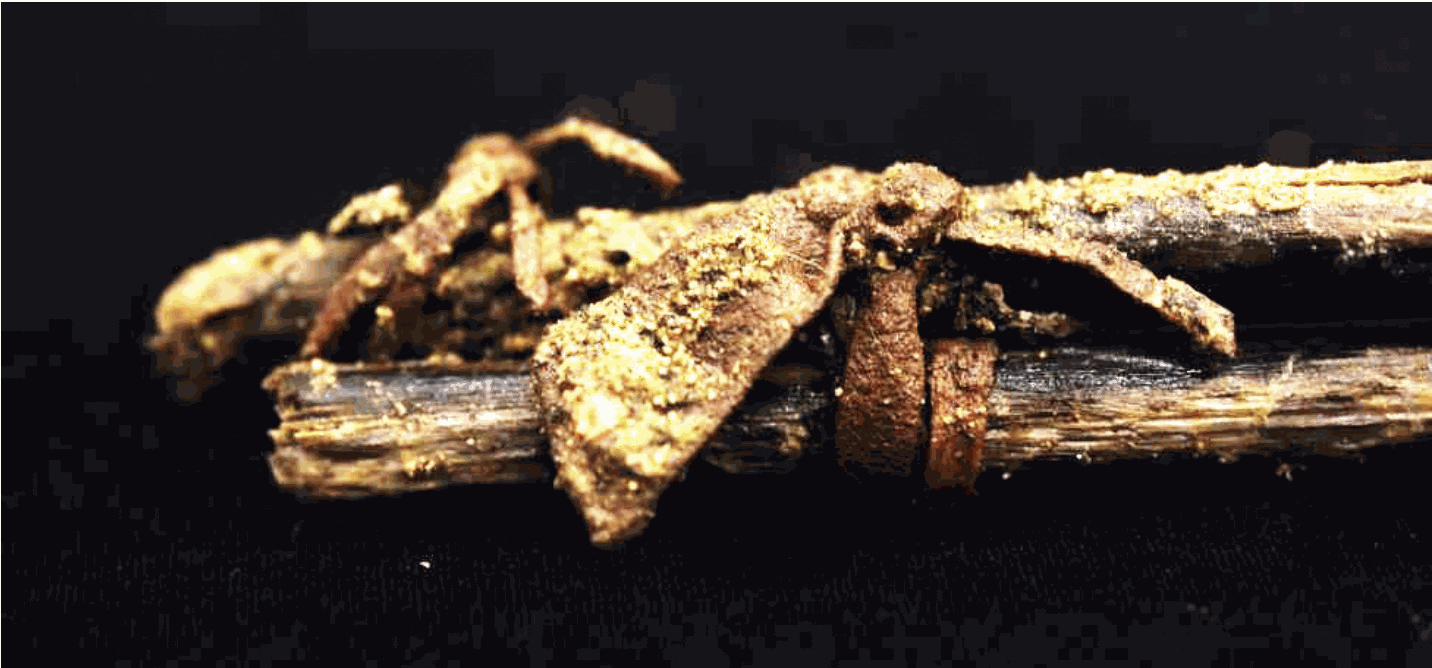
Detail of knotted ends on hide wrapped sticks. Photo by G. Hill
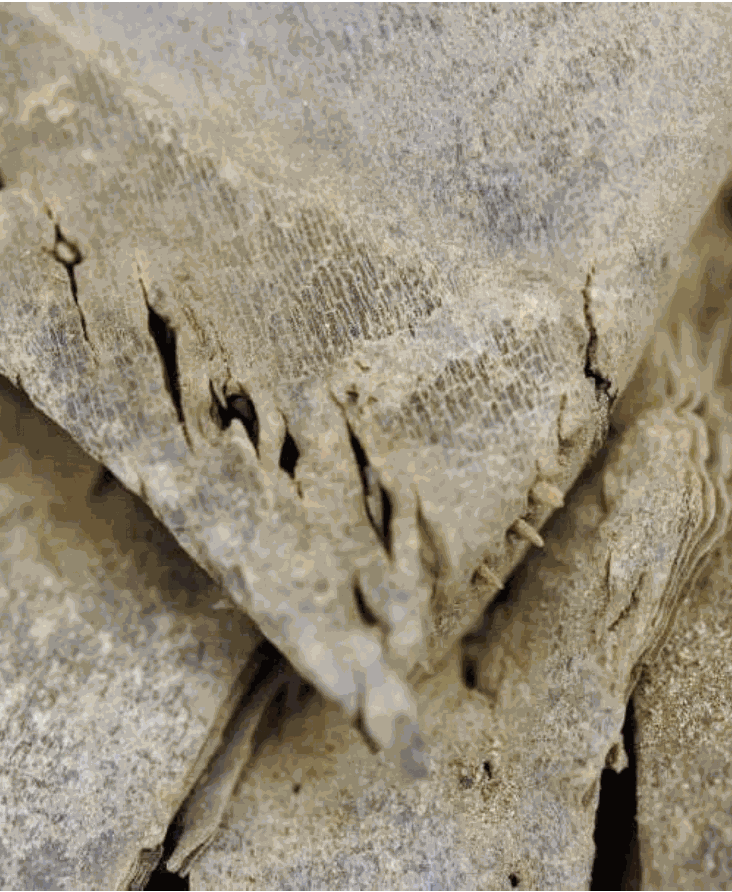
Detail of stitchery on birch bark container. Photo by G. Hill
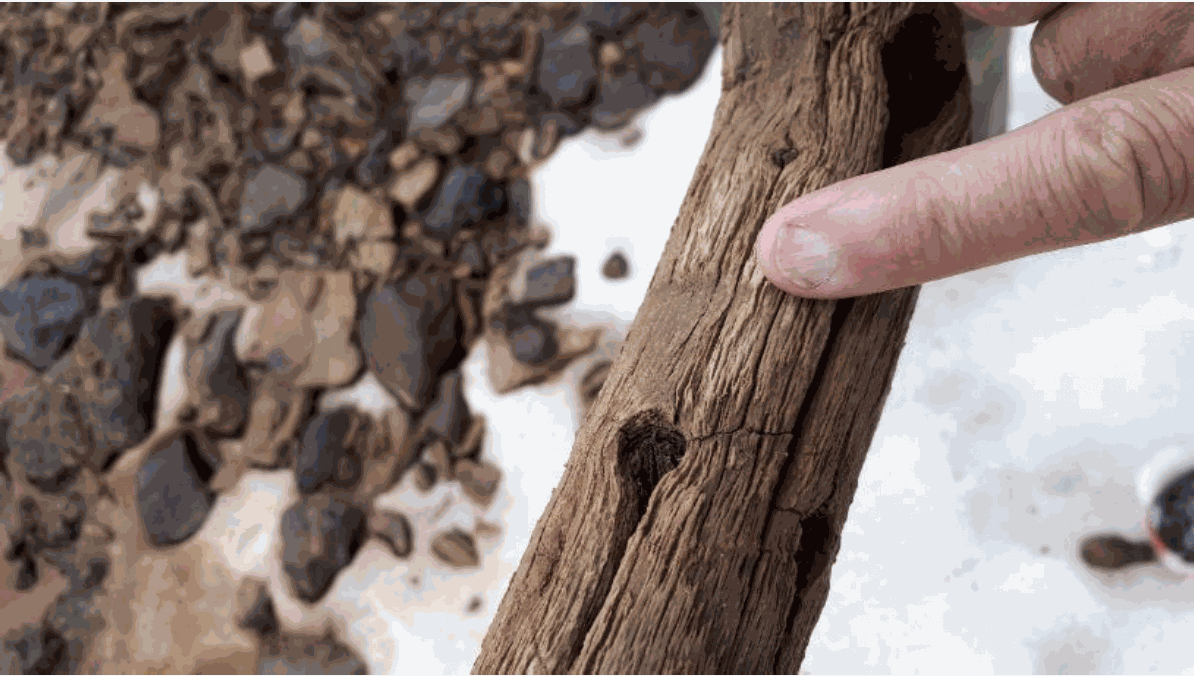
Detail of tool or binding mark on wooden staff
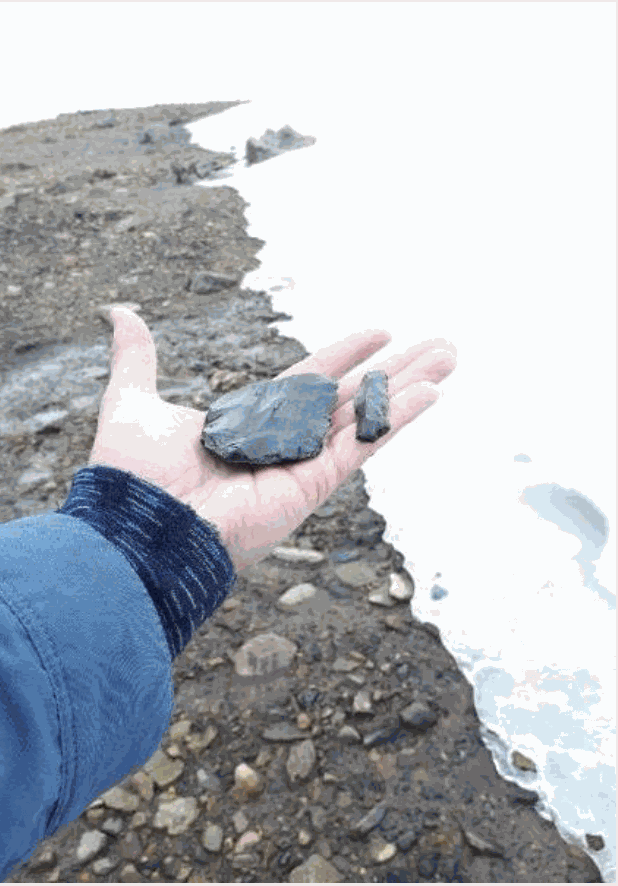
Dudāt biface and blade at edge of melting ice patch. Photo by D. McLaren
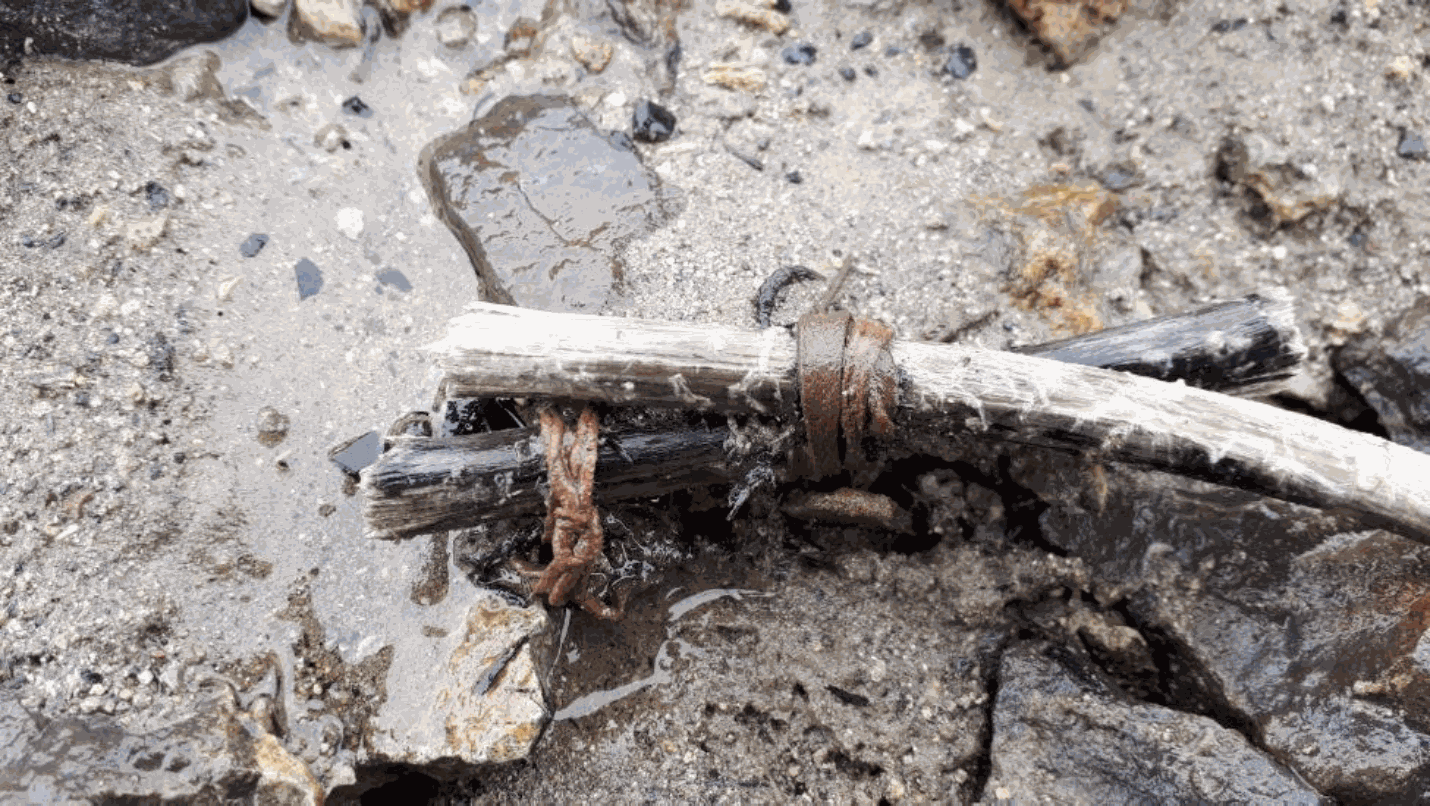
Hide wrapped sticks on surface below ice patch 3139-2950 years old. Photo by B. Gray
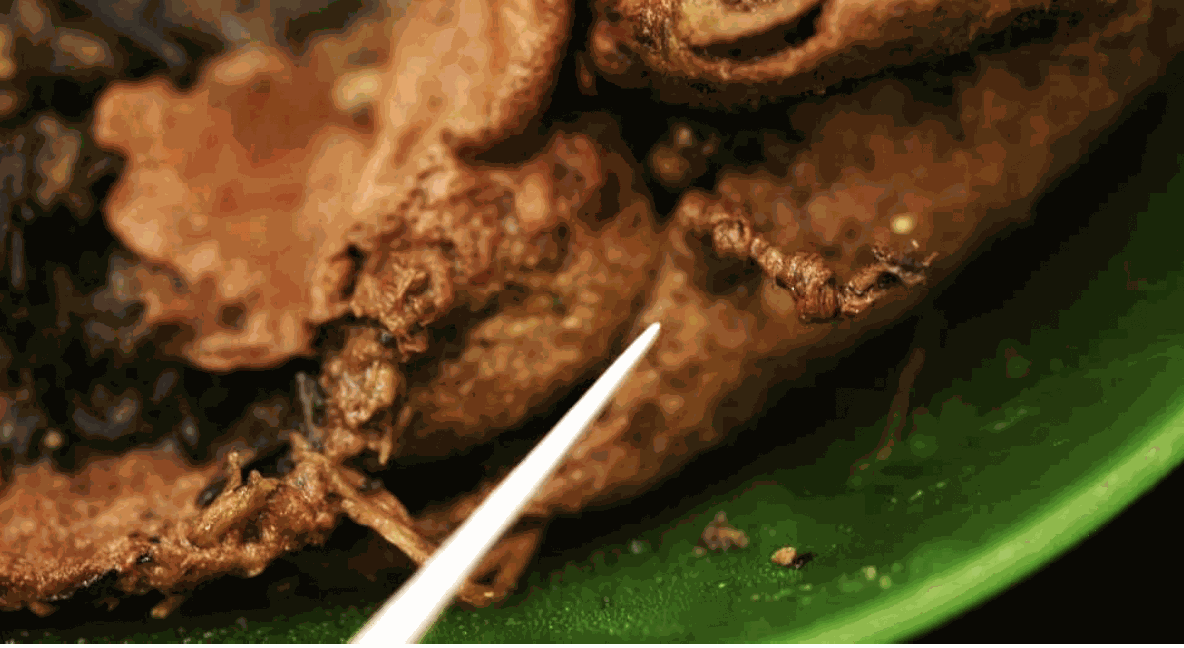
Knotted sinew end of stitch. Photo by G. Hill
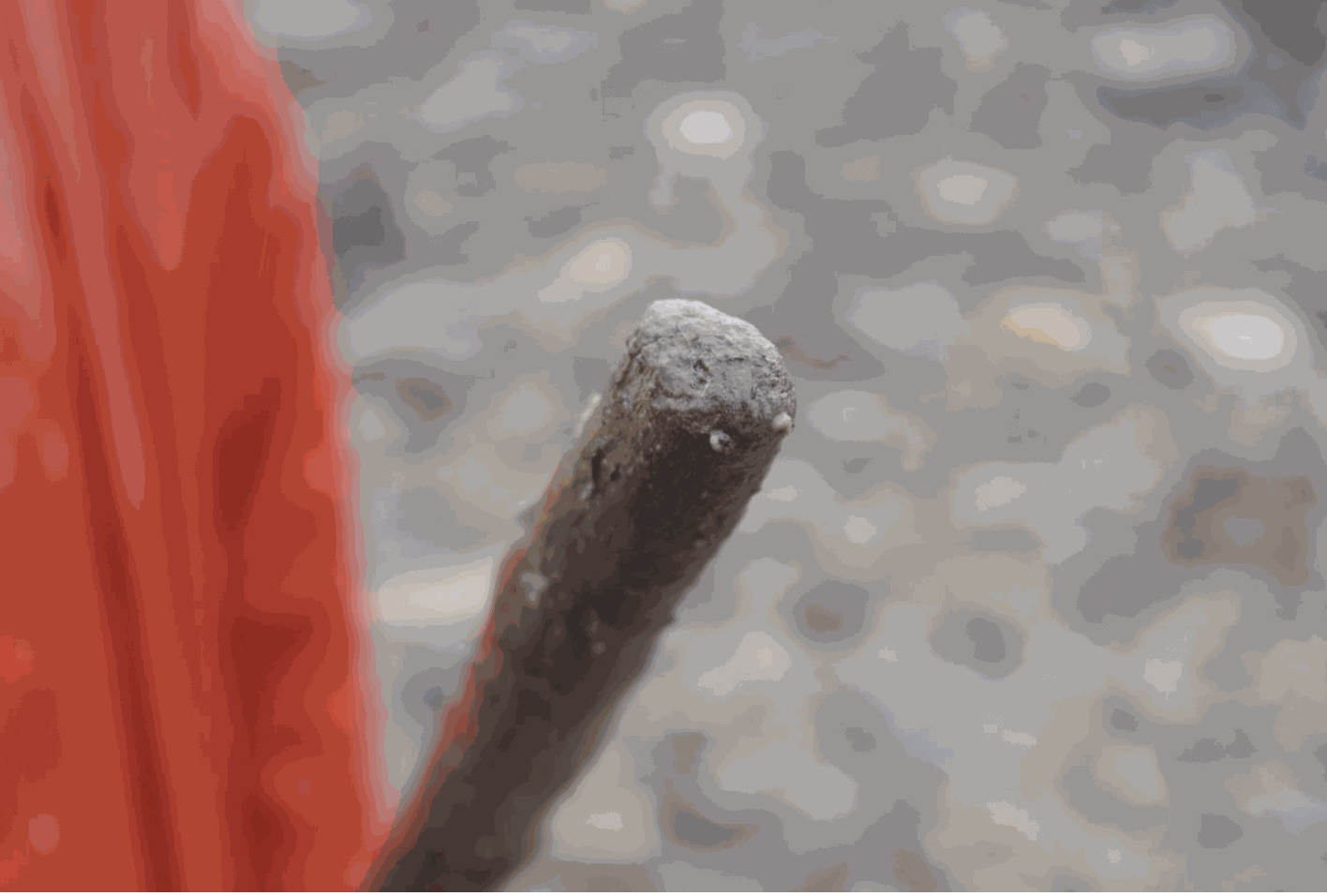
Photograph of walking staff end showing crushing and rounding resulting from use
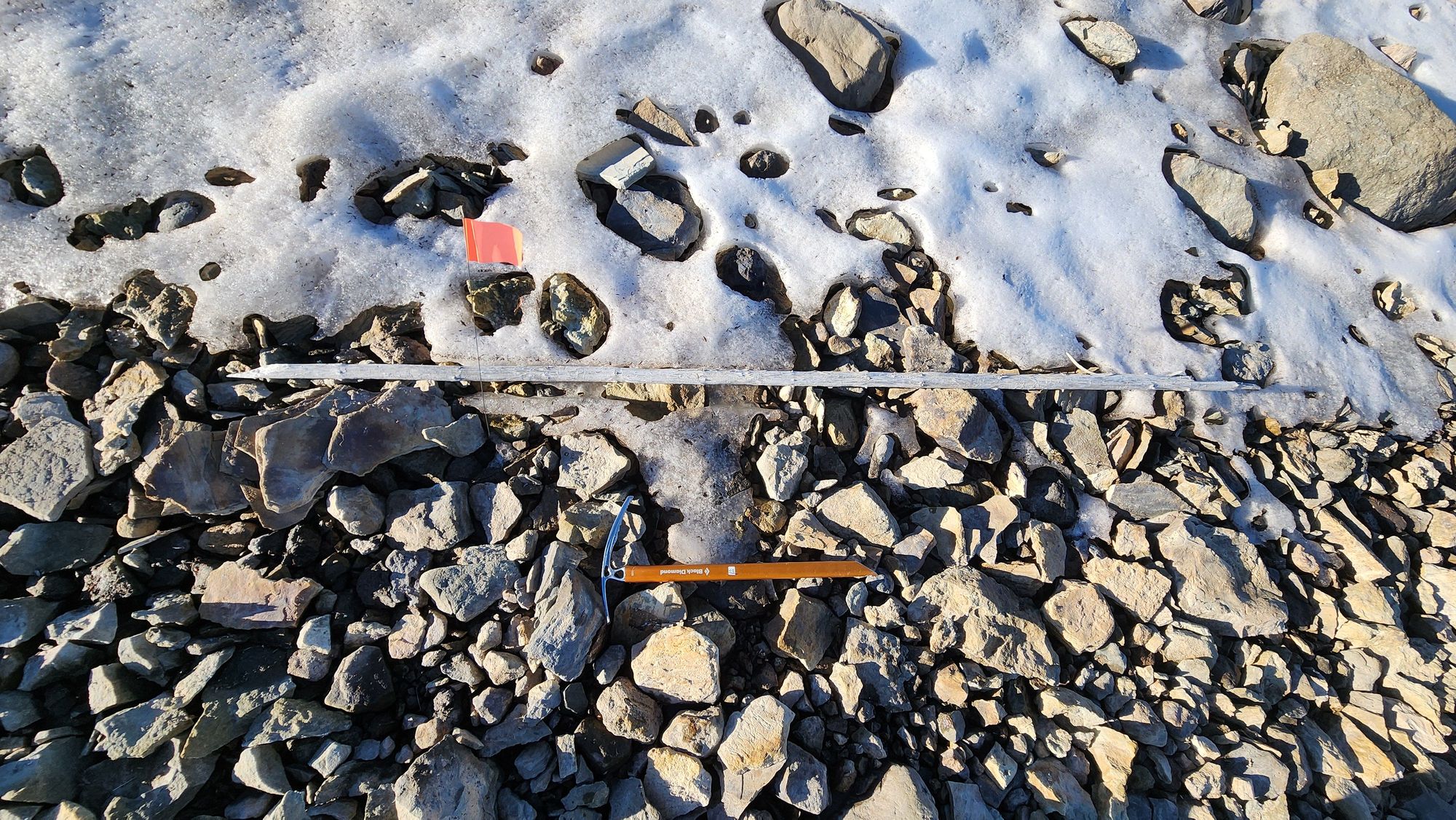
Sharpened wooden staff or spear at base of ice patch
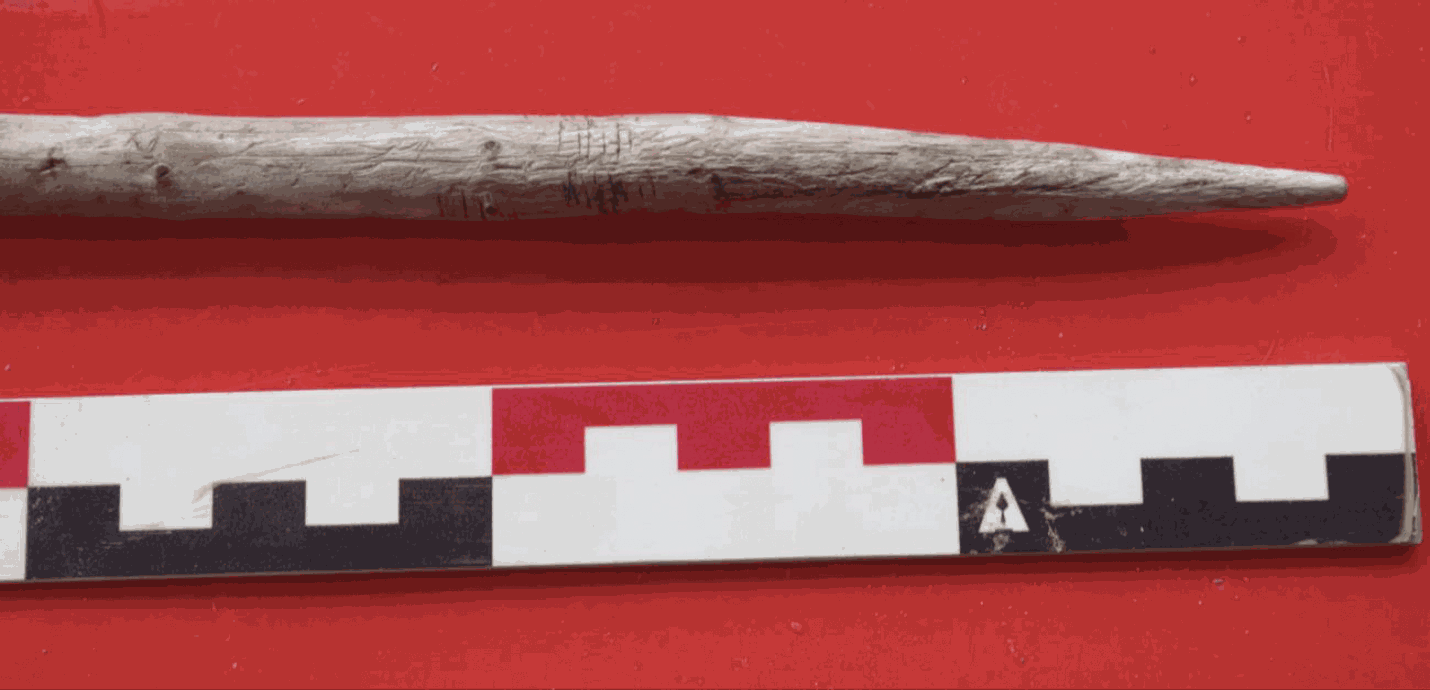
Showing detail of wooden dart point including incised perpendicular lines
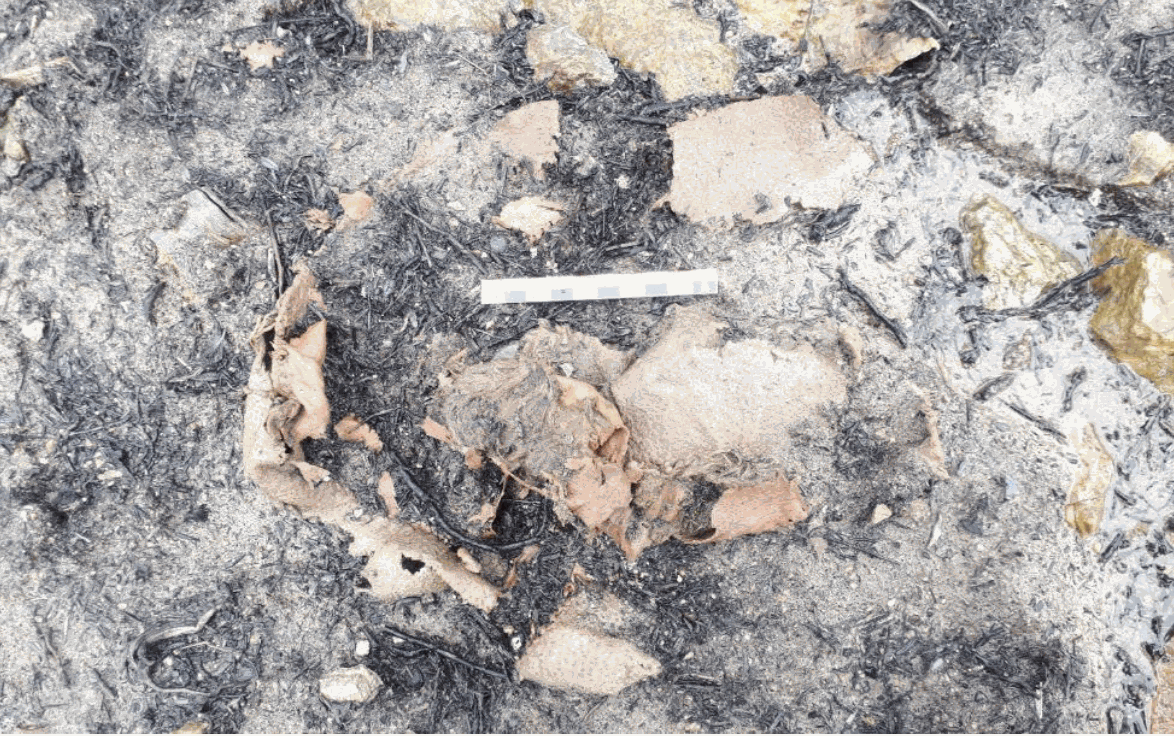
Stitched hide object (BG 163) dated to 6406-6219 years old. Photo by B. Gray
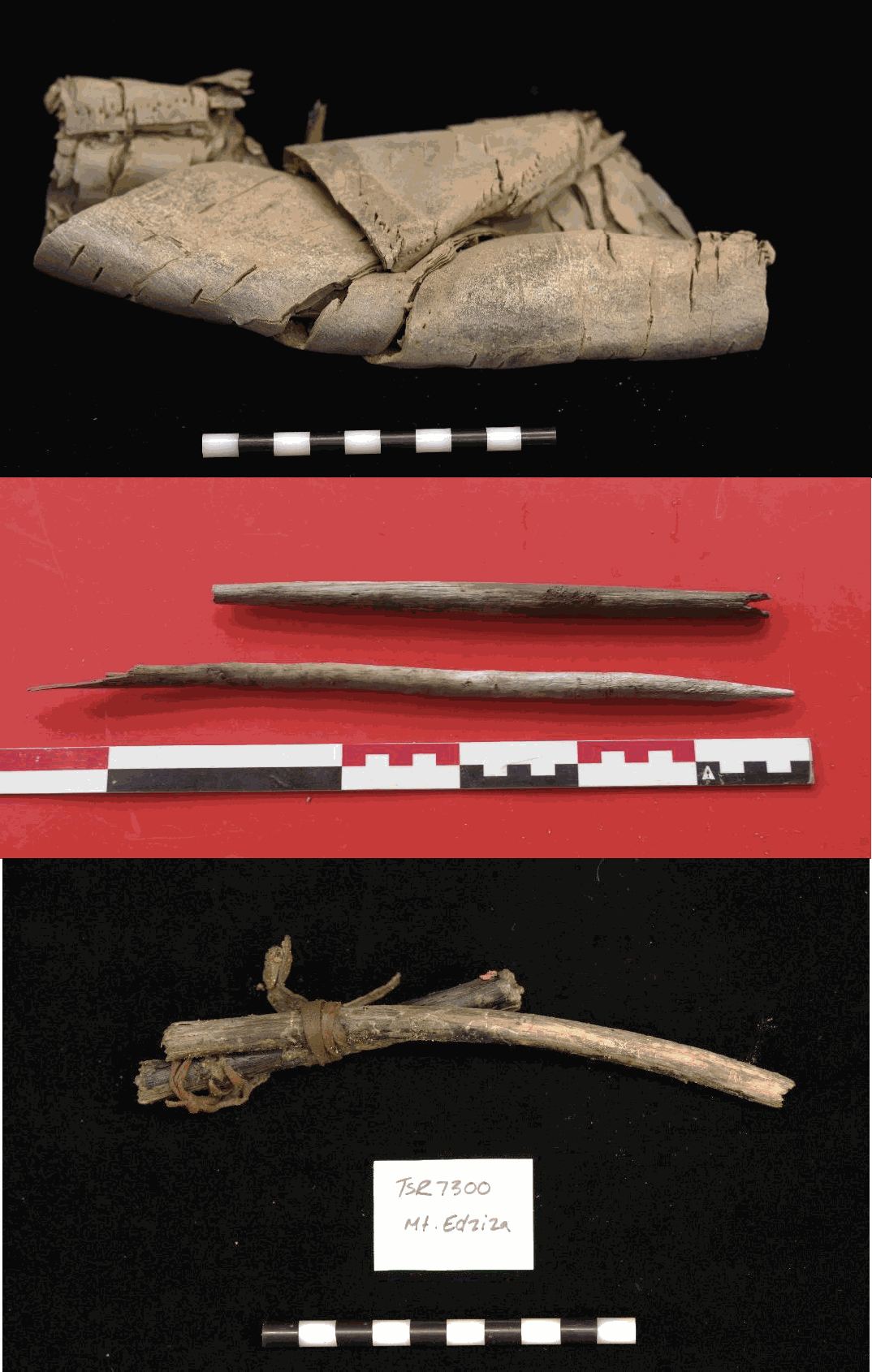
Top to bottom- stitched birch bark (possibly a basket), wooden spear shaft fragments and stick with hide rope tied in knots. Top and bottom images courtesy RBCM
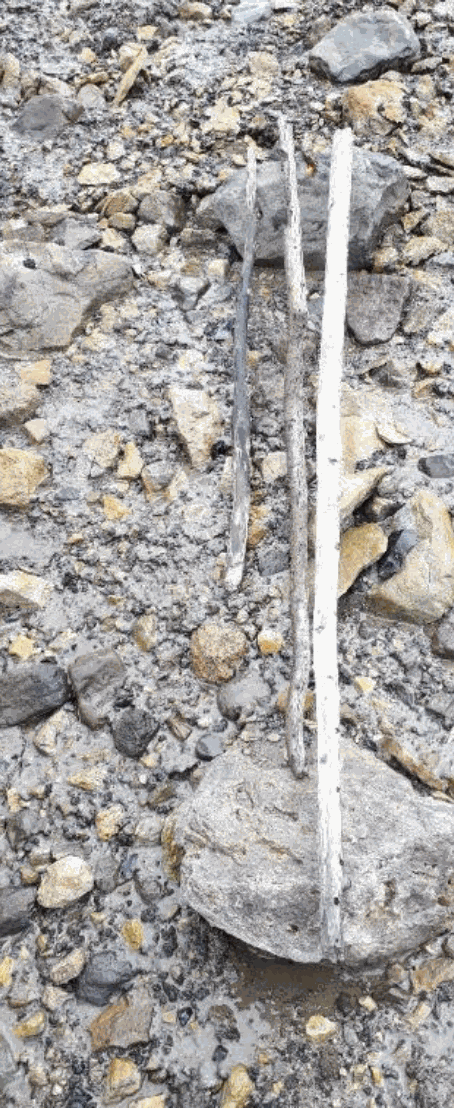
Two wooden sticks and one staff found together on surface below ice patch. Photo by B. Gray
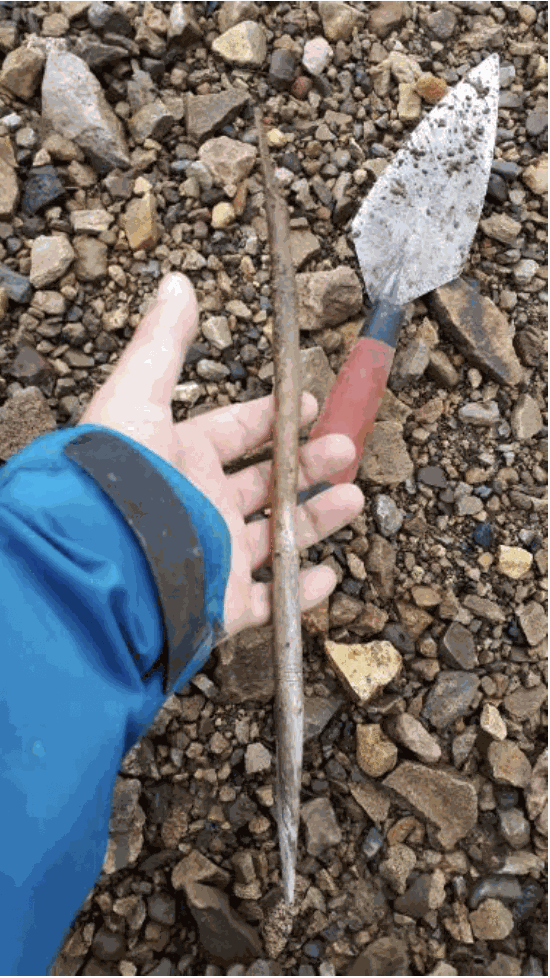
Wooden dart point 6183-6002 years old. Photo by B. Gray
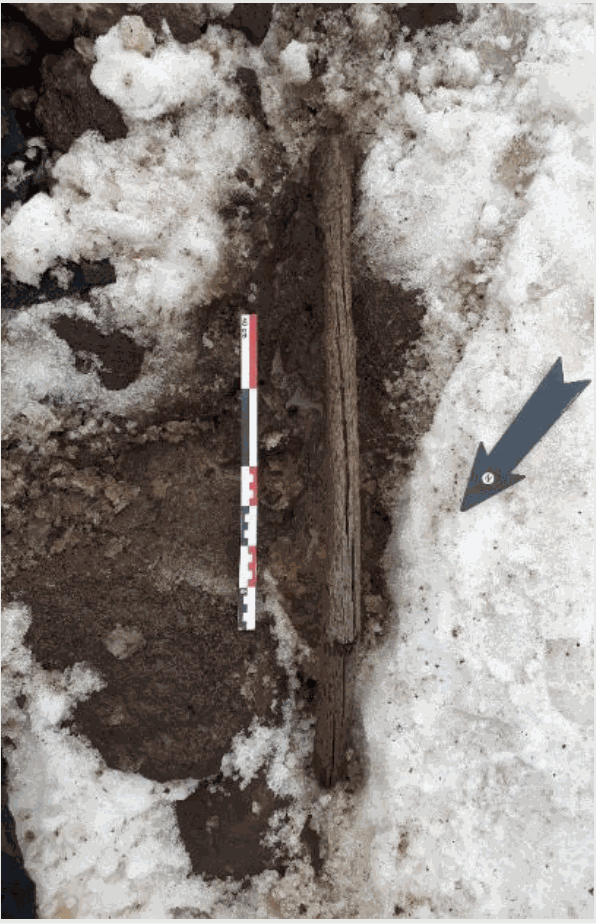
Wooden staff after removing ice. Photo by D. McLaren
Summer 2026 Field Season
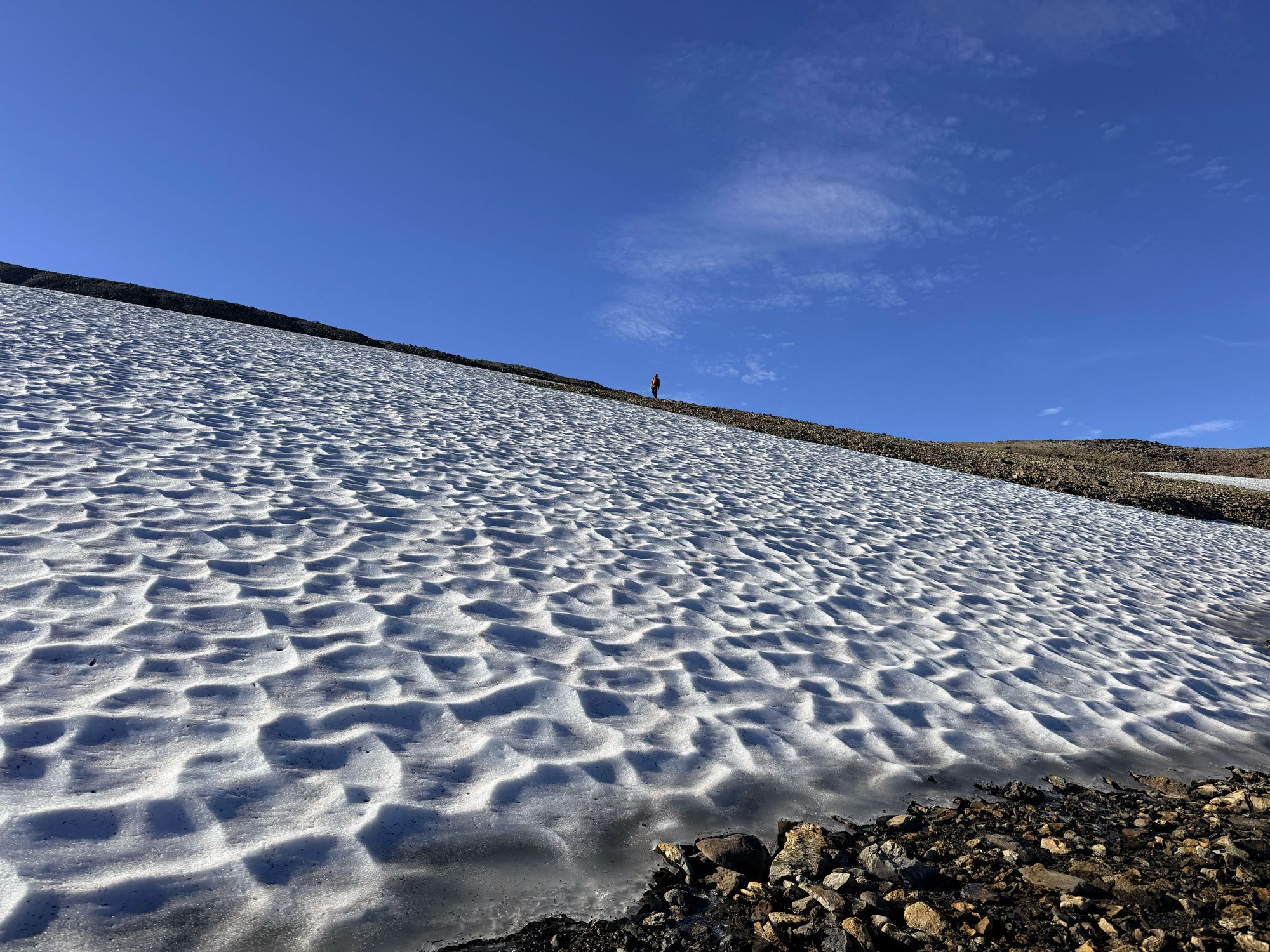
Approaching an ice patch study site. Photo by L Louie.
In early September 2026, the TCG’s Department of Language, Culture, and Heritage dispatched a team to Kitsu Plateau to undertake another round of research focused on ice patch archaeology. This follows successful expeditions conducted around the same areas in 2019 and 2024, described below. TCG Archaeological Monitors Lesli Louie and Trinidy Quigley joined the field operation in collaboration with Duncan McLaren and Brendan Gray from Cordillera Archaeology.
This summer the team found numerous wooden staffs, an atlatl dart shaft fragment, a carved bone awl tool/point, and antler billets for flaking obsidian. Samples were taken for radiocarbon dating analysis on several of the objects found this year. We’ll share the results as soon as we get them.
The team made all their findings amongst a backdrop of hundreds of thousands of scattered obsidian objects.
Funds for this year’s field work were facilitated by Rachel Cameron through BC Parks.
With the onset of a new El Niño climatic cycle, we are seeking funds to monitor these sites over the next five years and to document new areas not previously identified.
All photos by Lesli Louie, unless otherwise noted.
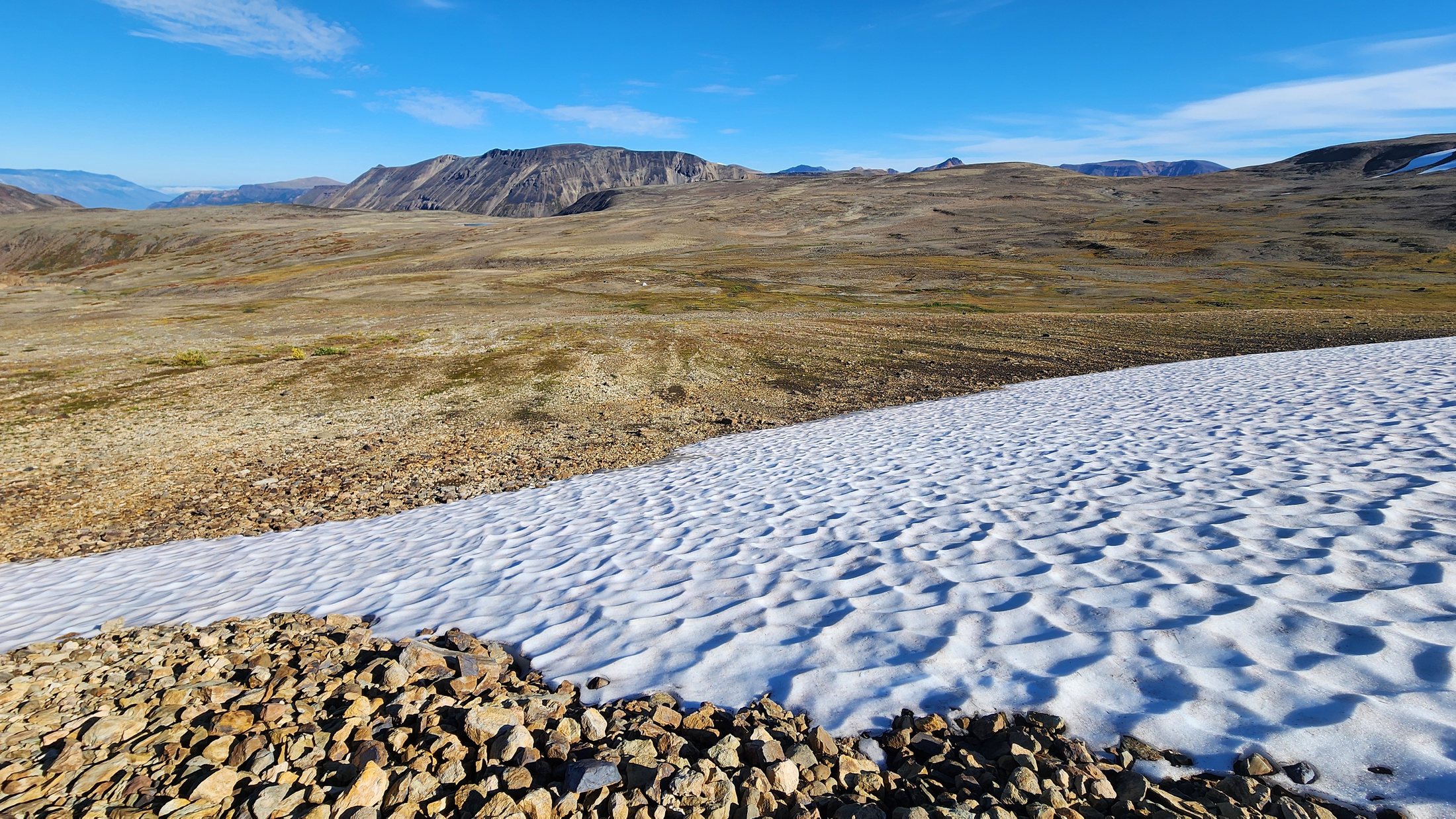
View over ice patch and the Kitsu Plateau below. Photo by D McLaren
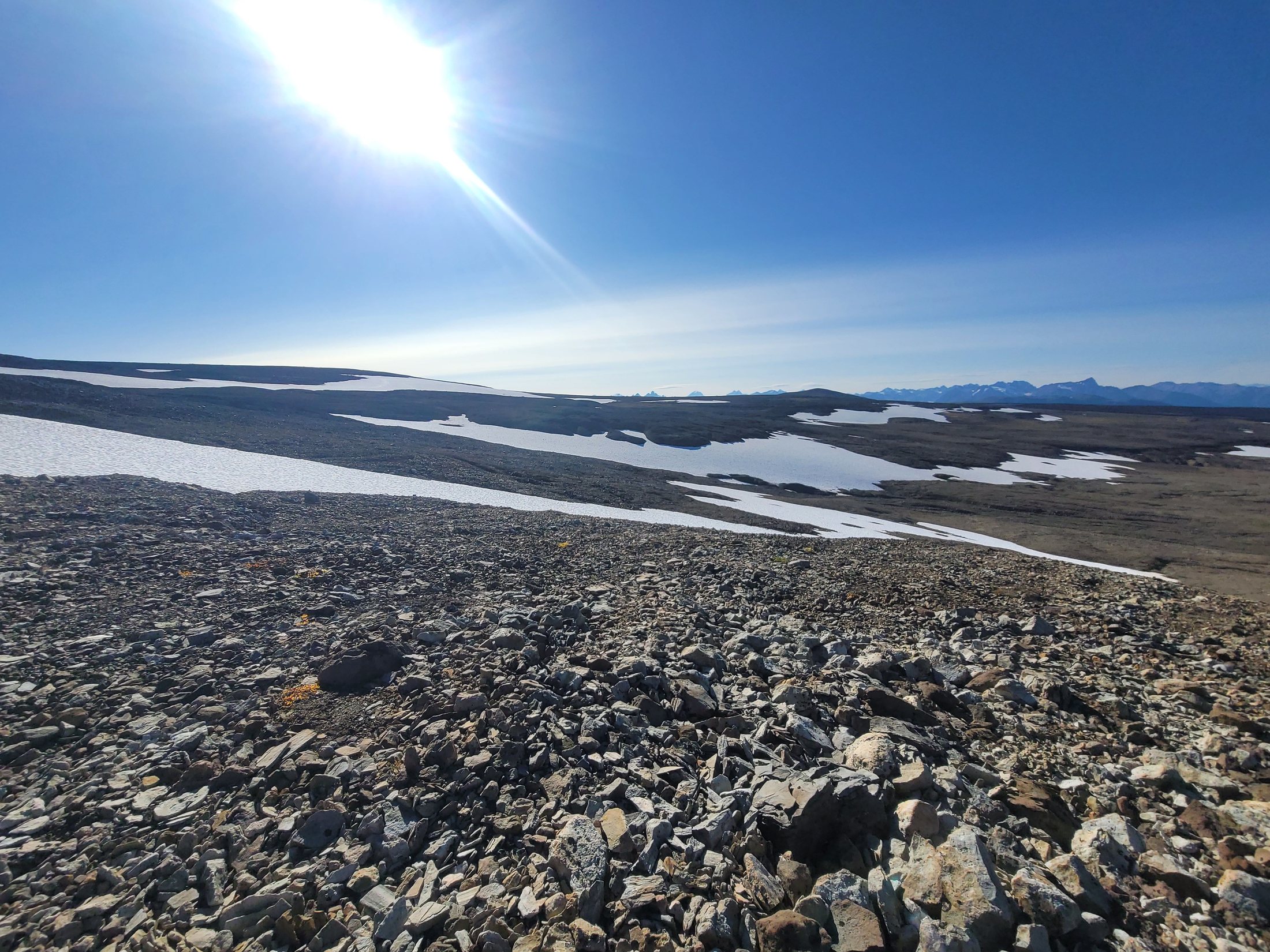
View of Ice Patches on the Kitsu Plateau
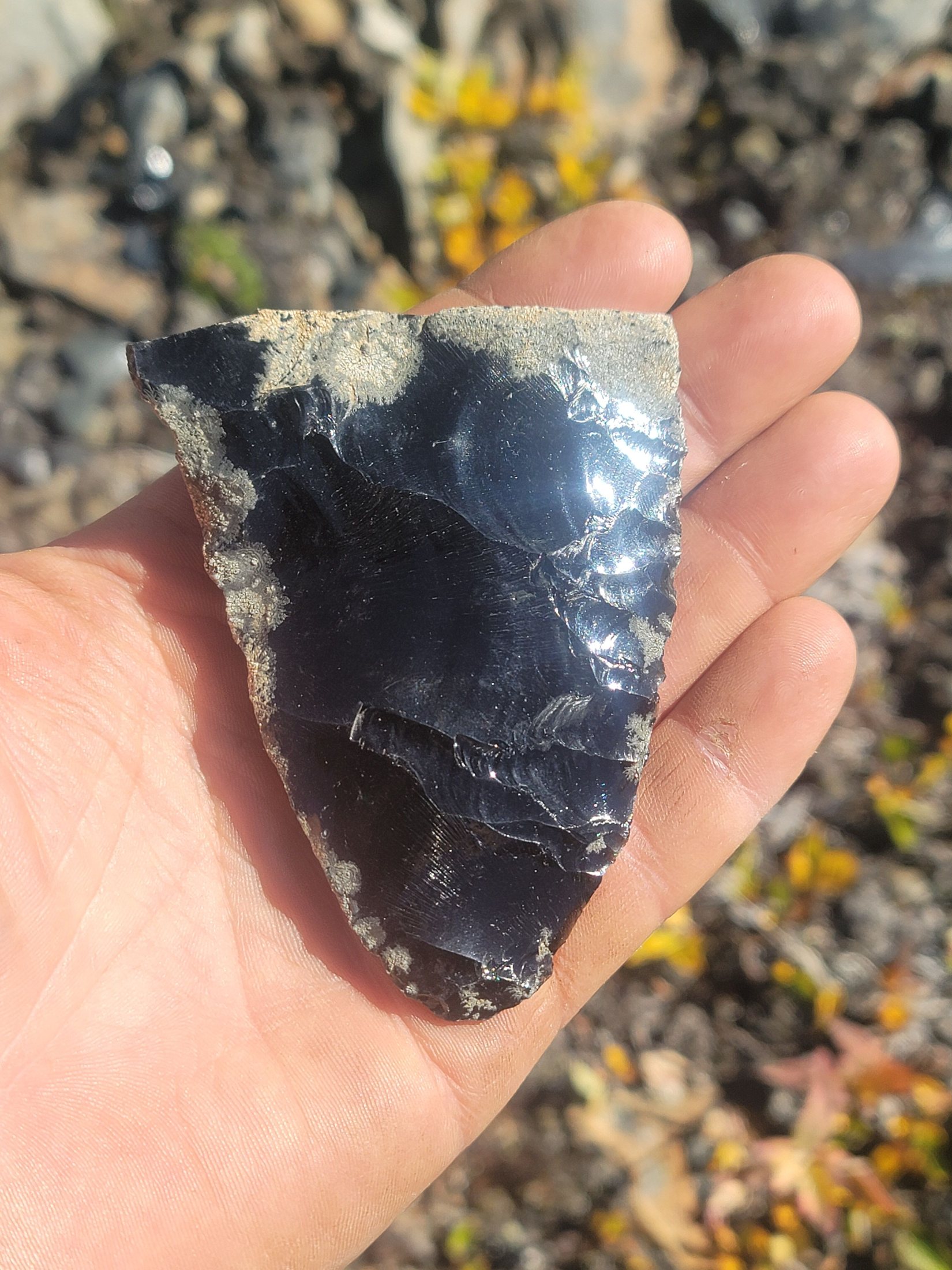
Typical large dudāt biface fragment
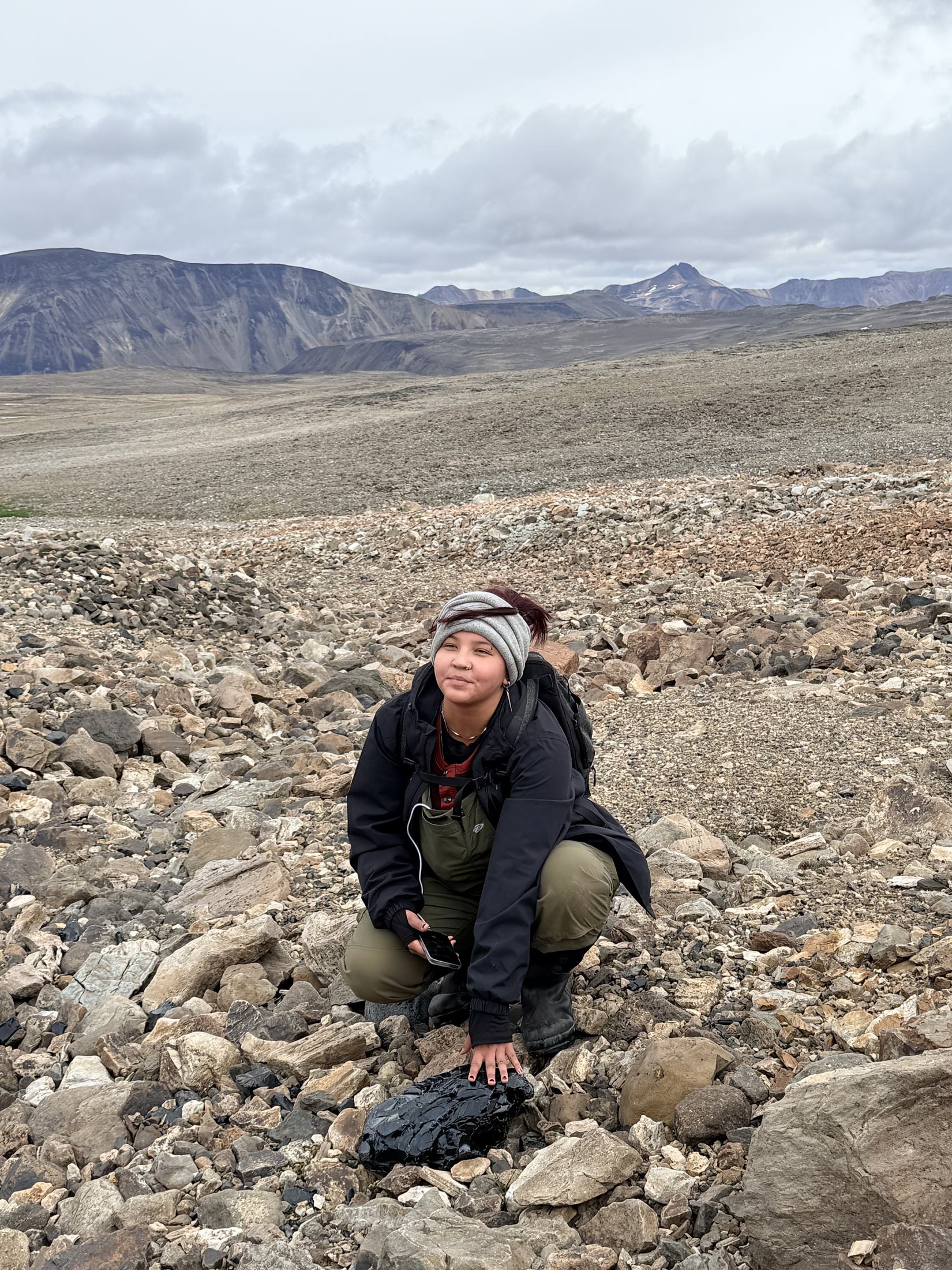
Trinidy Quigley with an dudāt boulder
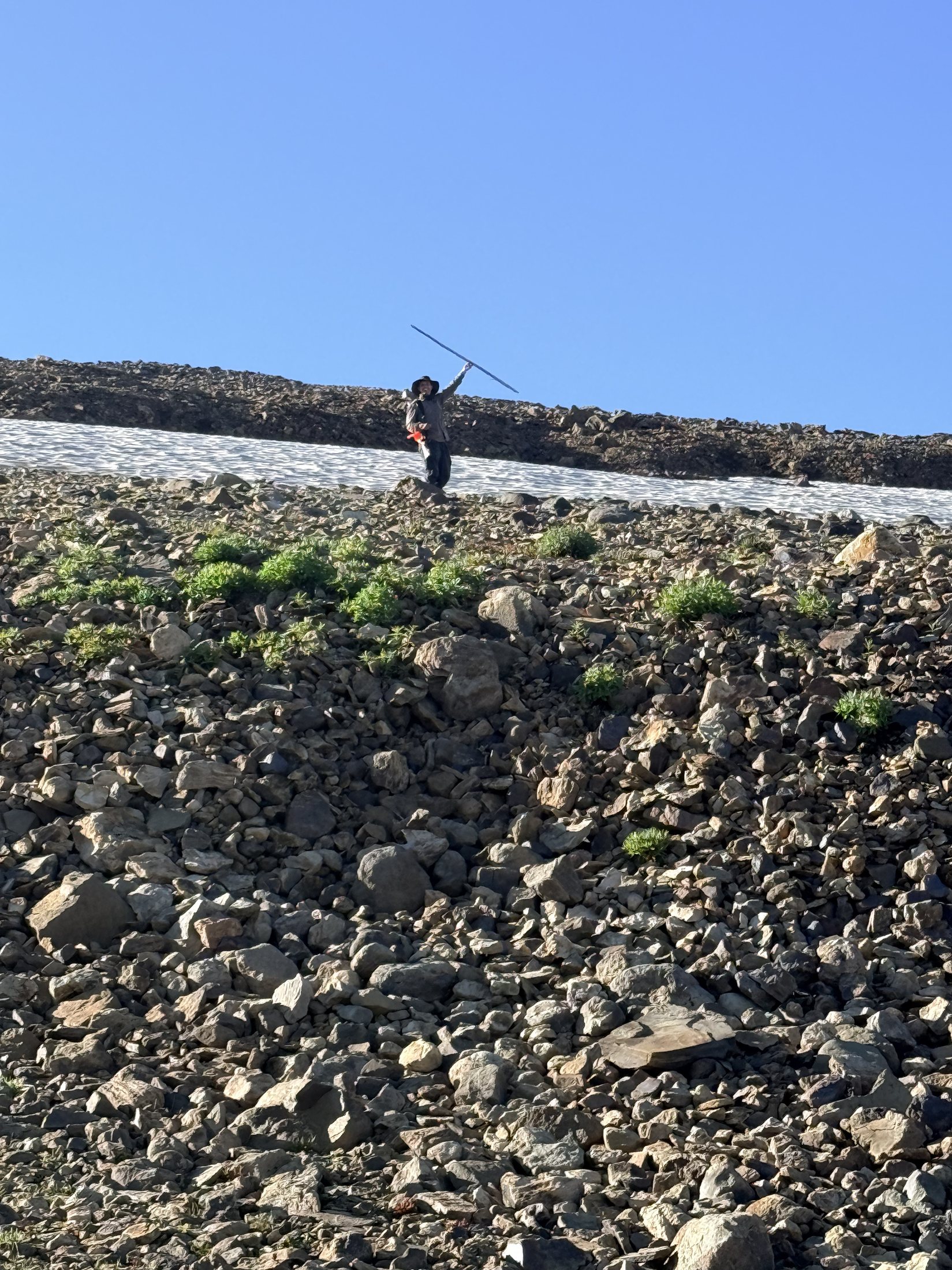
Brendan Gray with a tes̱, an ancient walking stick
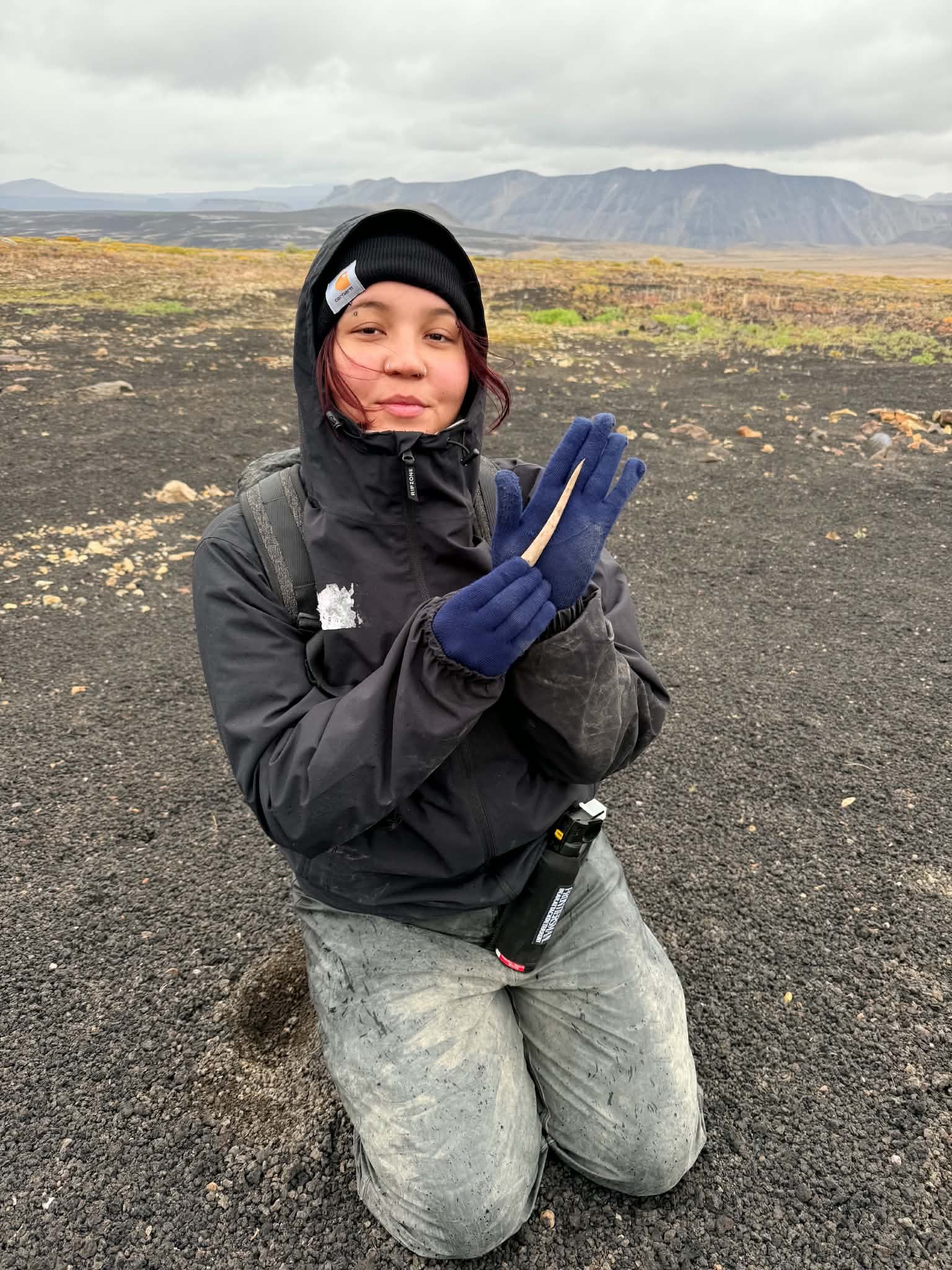
Trinidy Quigley holding bone awl or projectile point she below ice patch
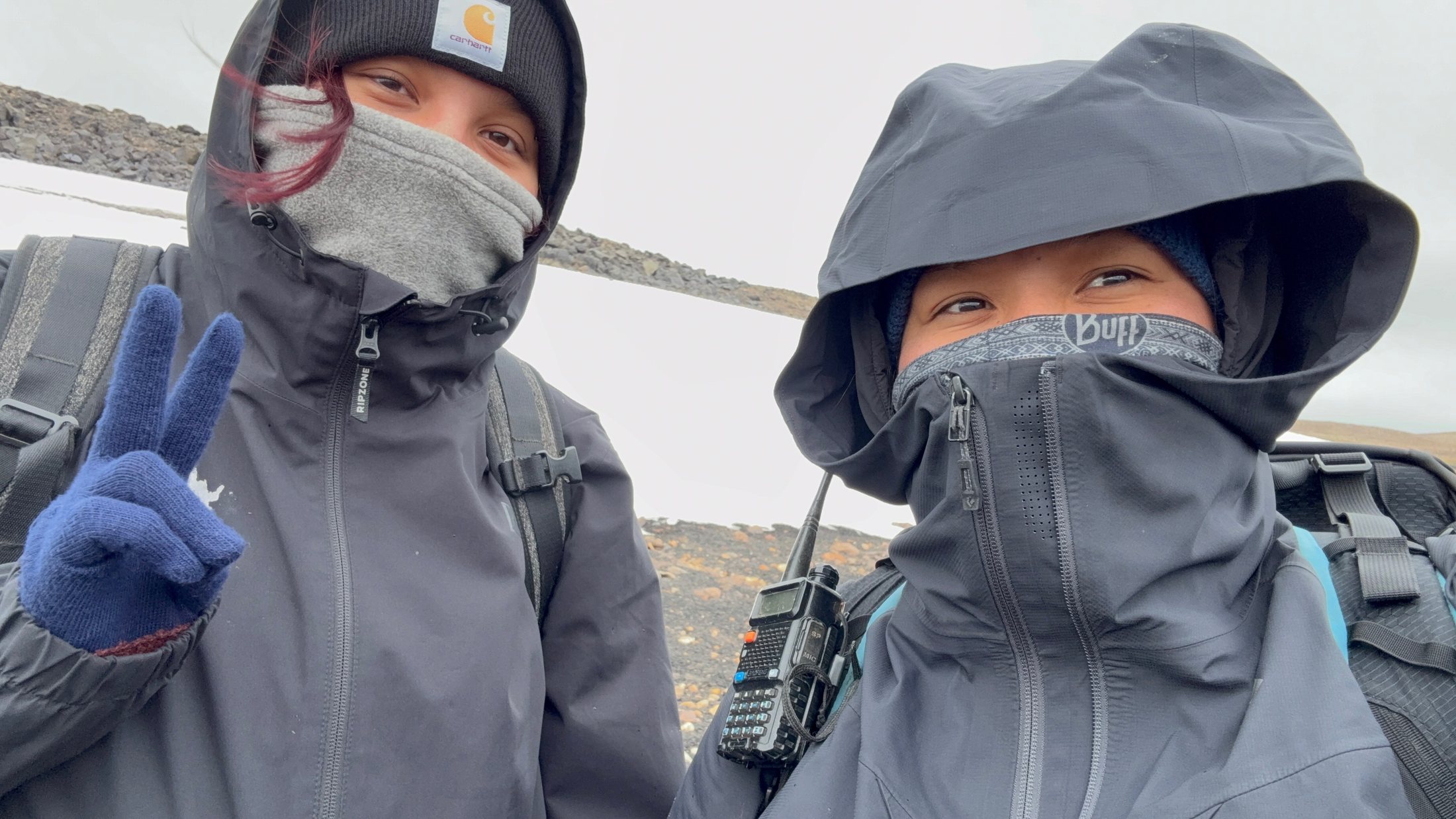
Trinidy Quigley and Lesli Louie enjoying the weather
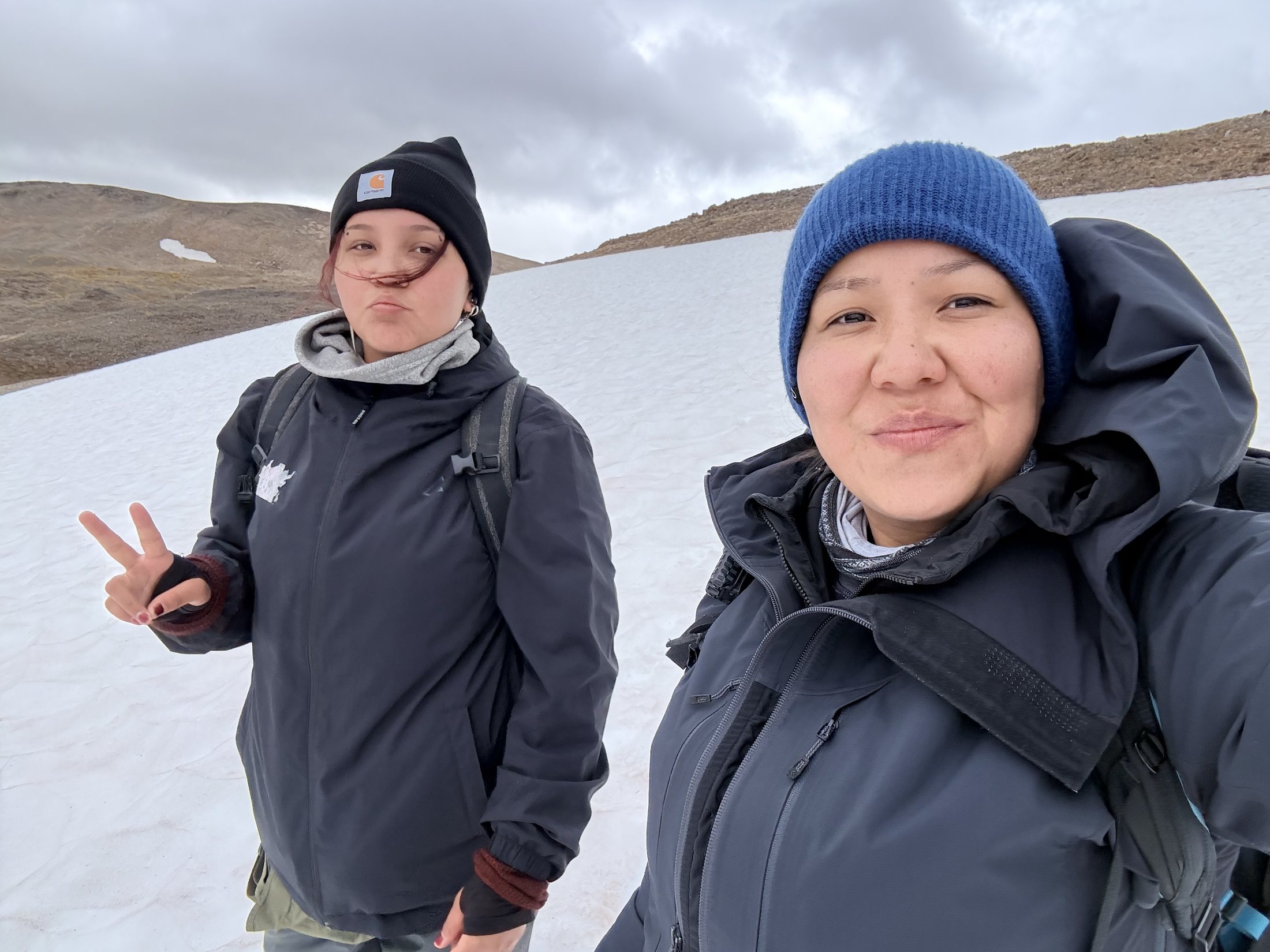
Trinidy Quigley and Lesli Louie at work searching an ice path
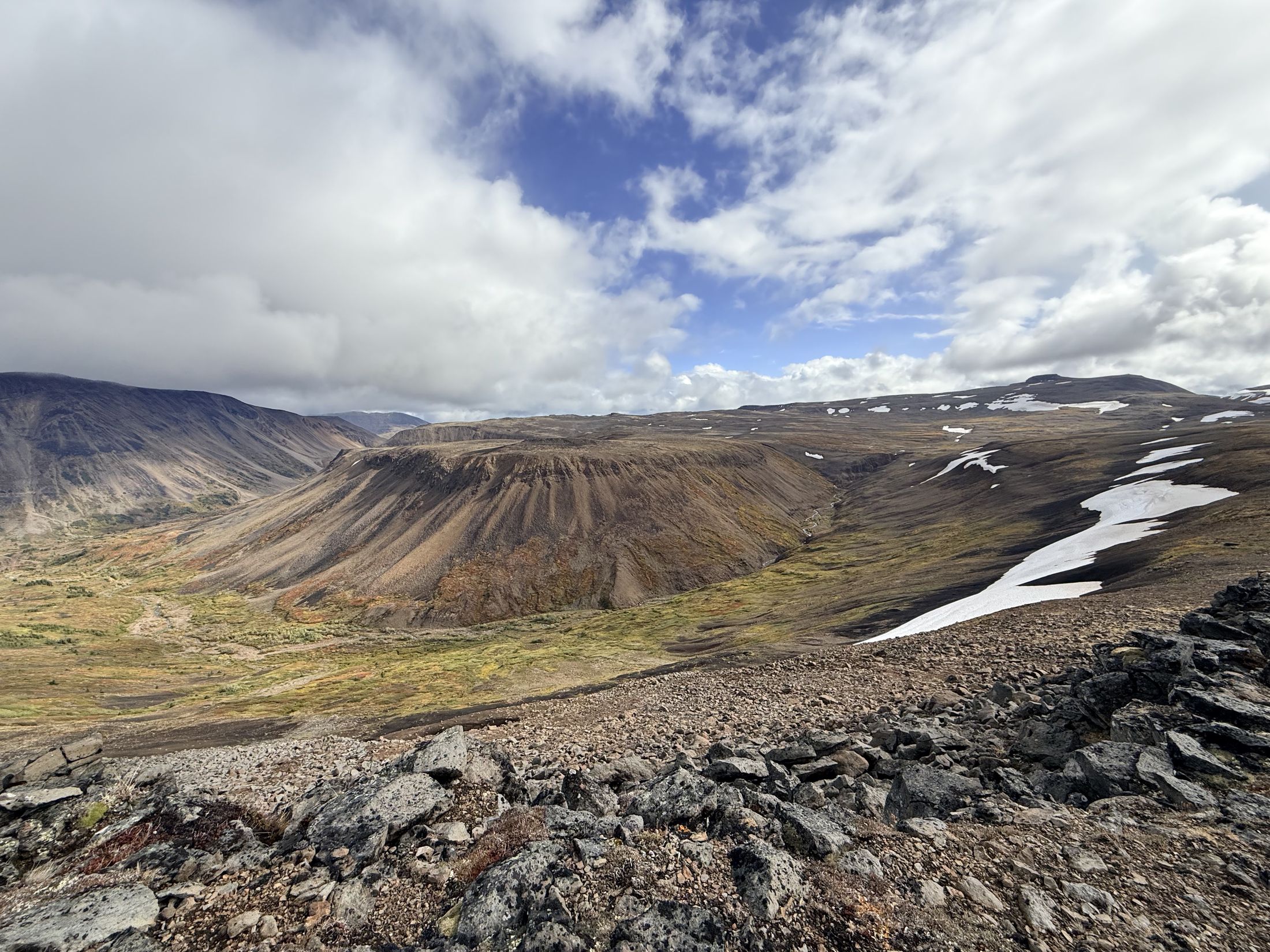
The field site on the plateau
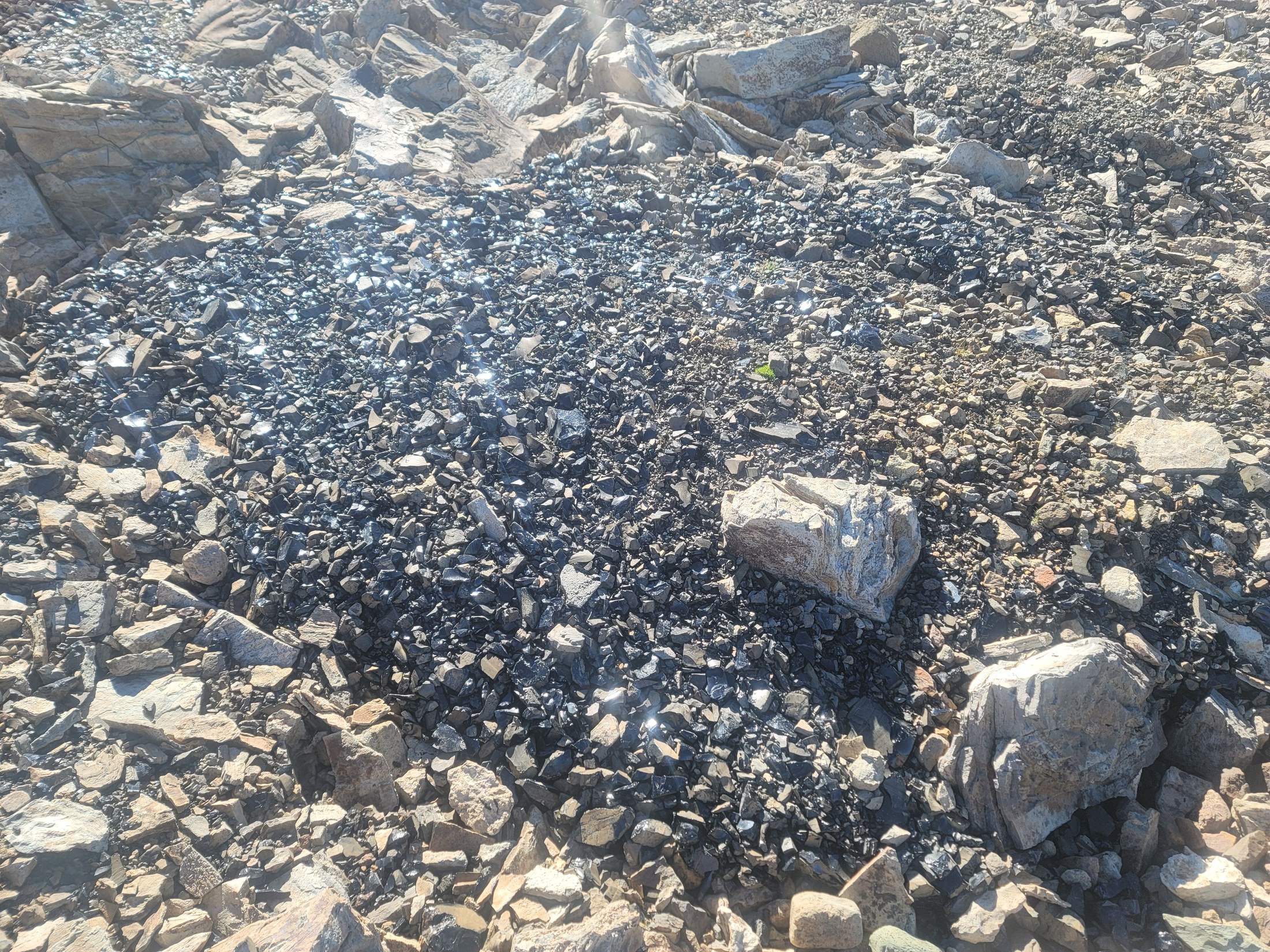
Sparkling dudāt work station
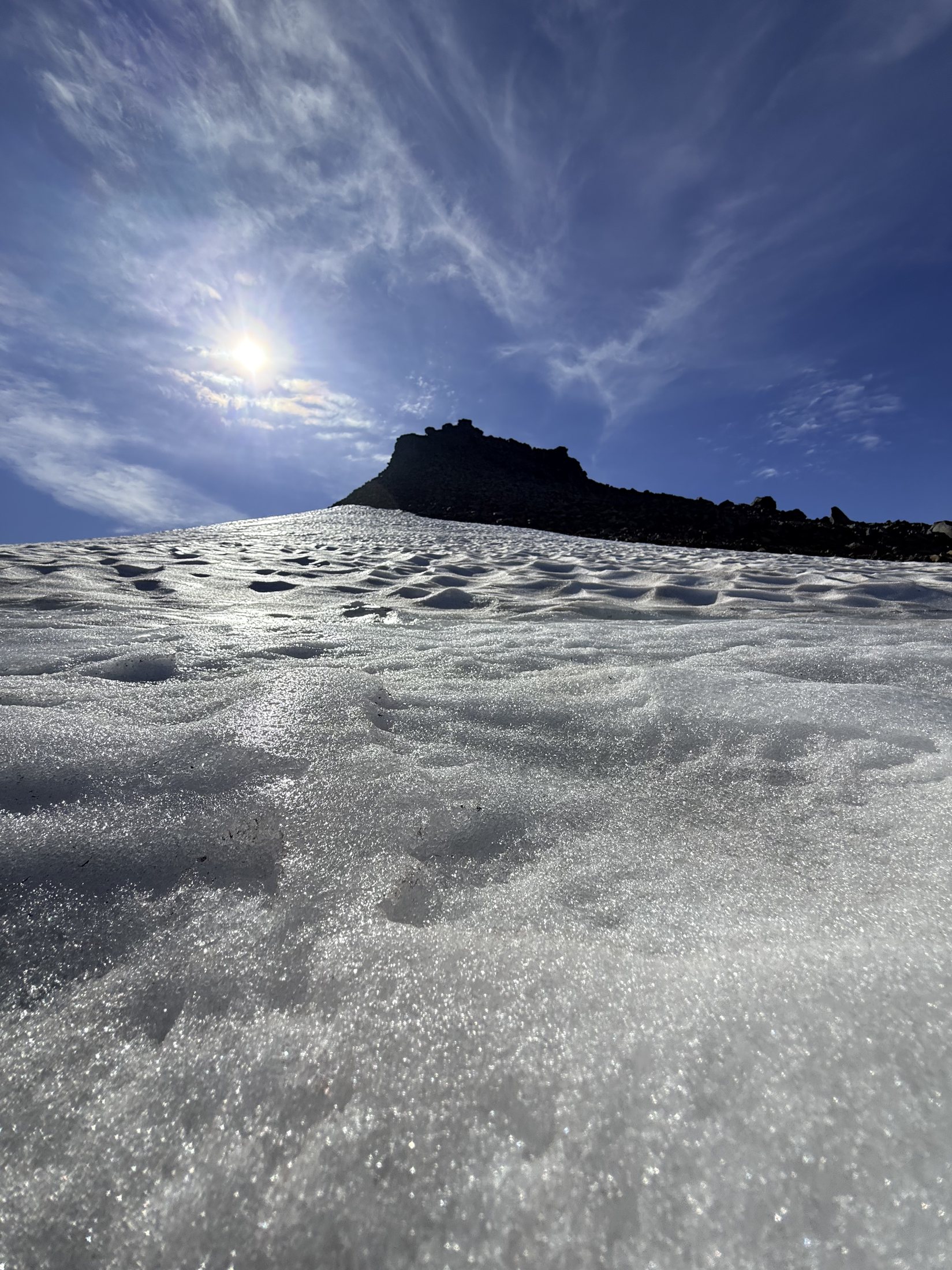
On the ice patch.
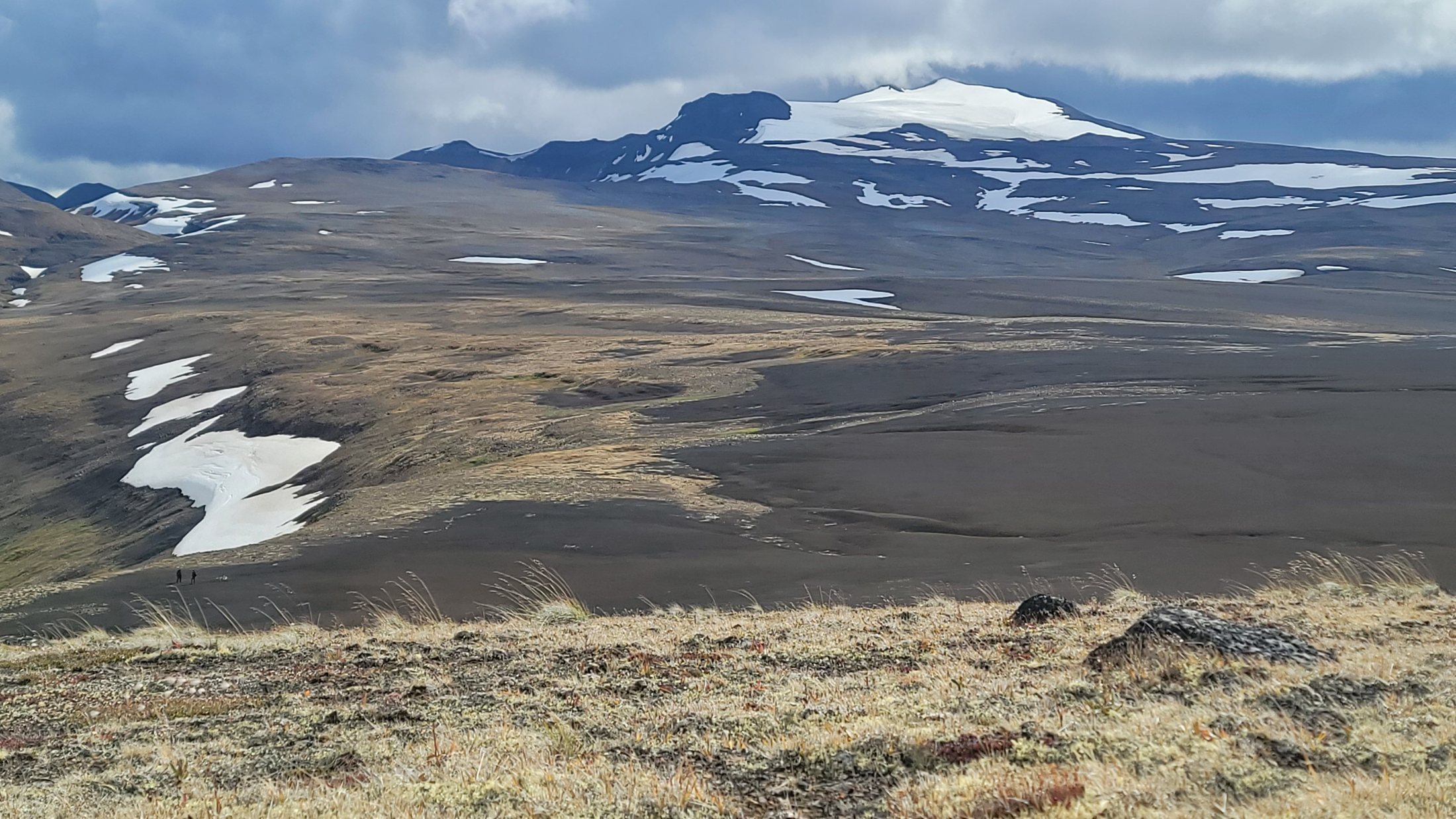
Looking towards Kitsu Peak with glaciers and ice patches
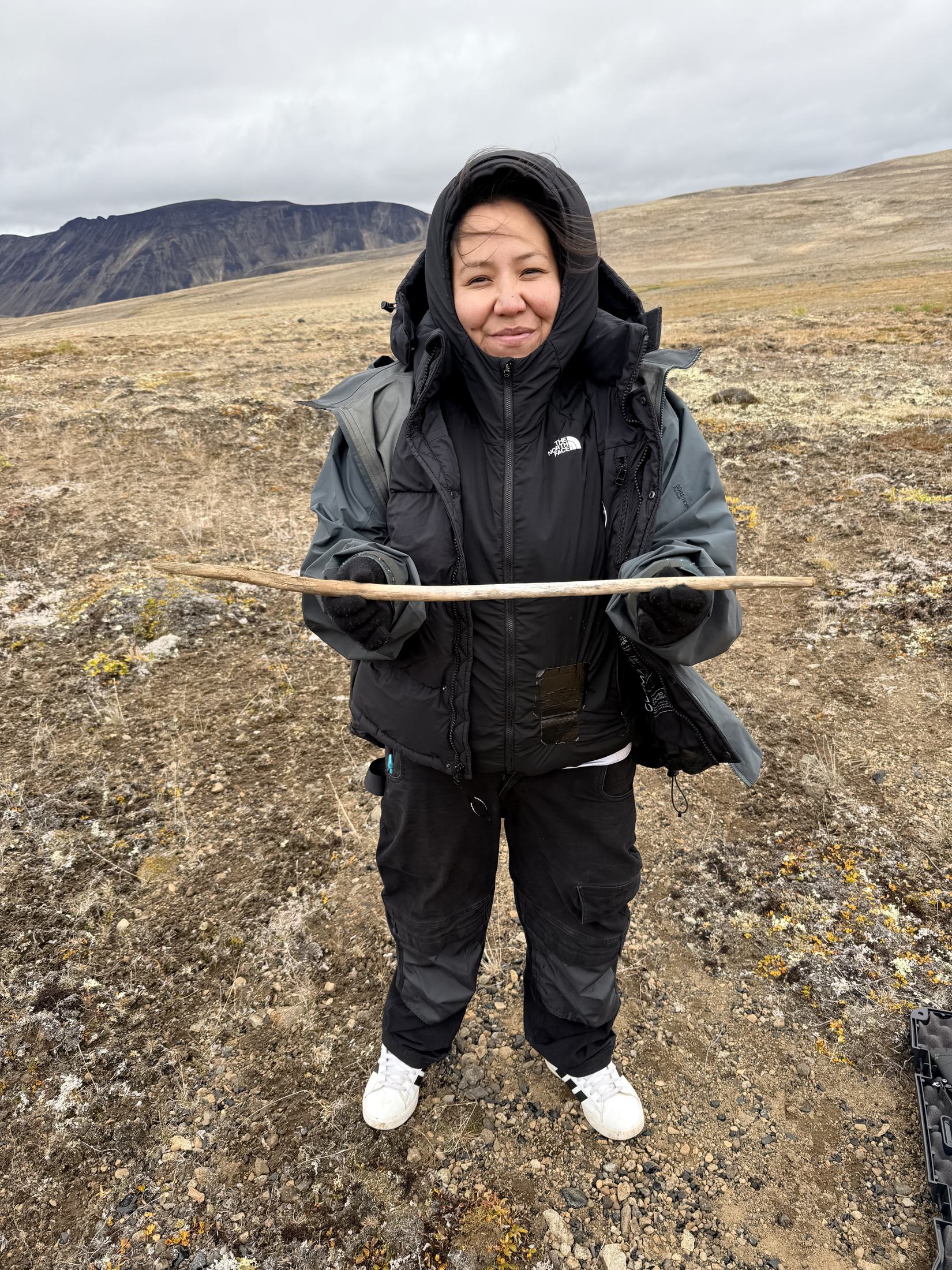
Lesli Louie shows an atlatl dart shaft fragment found in the melting ice
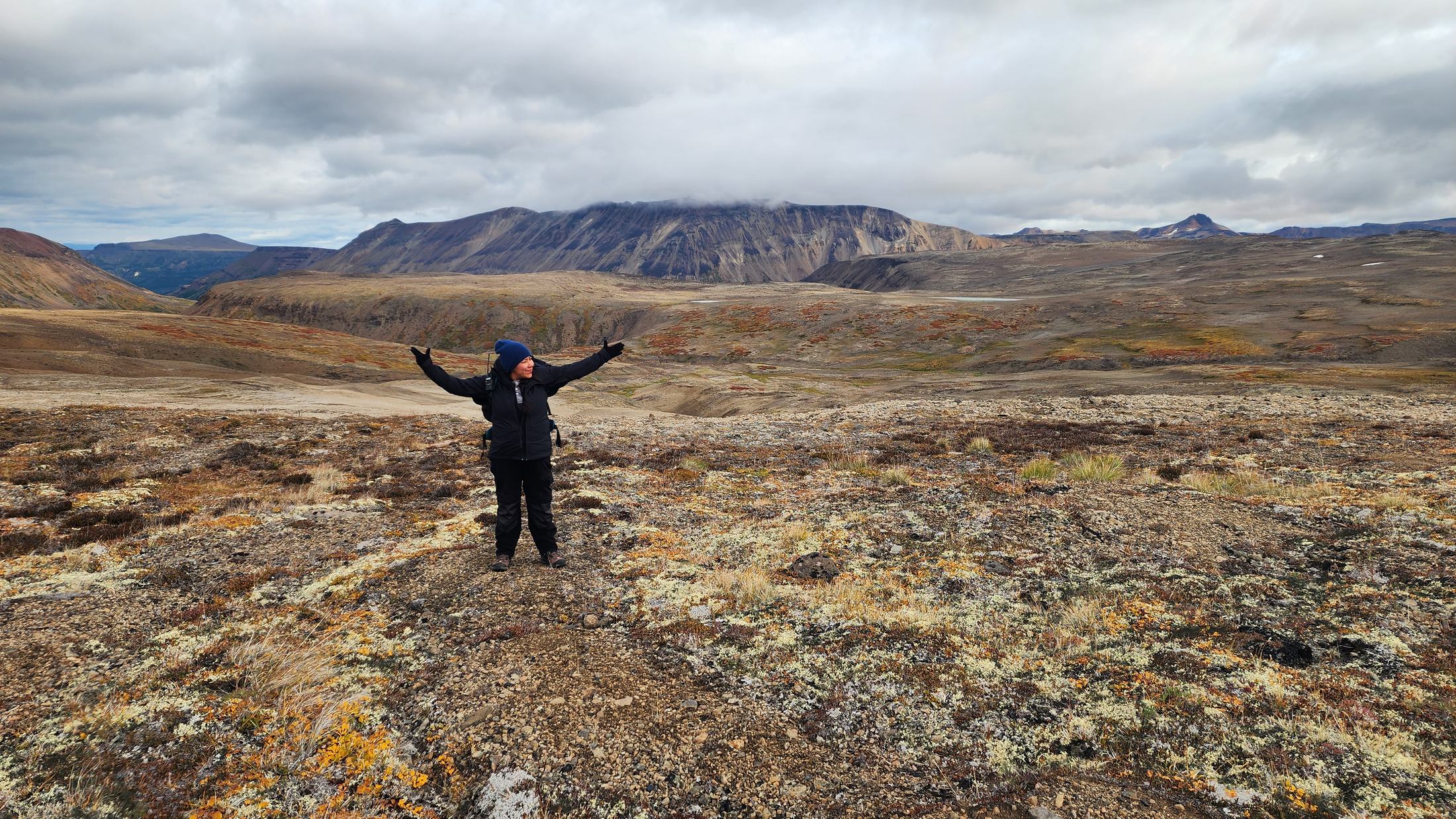
Lesli Louie on the Kitsu Plateau
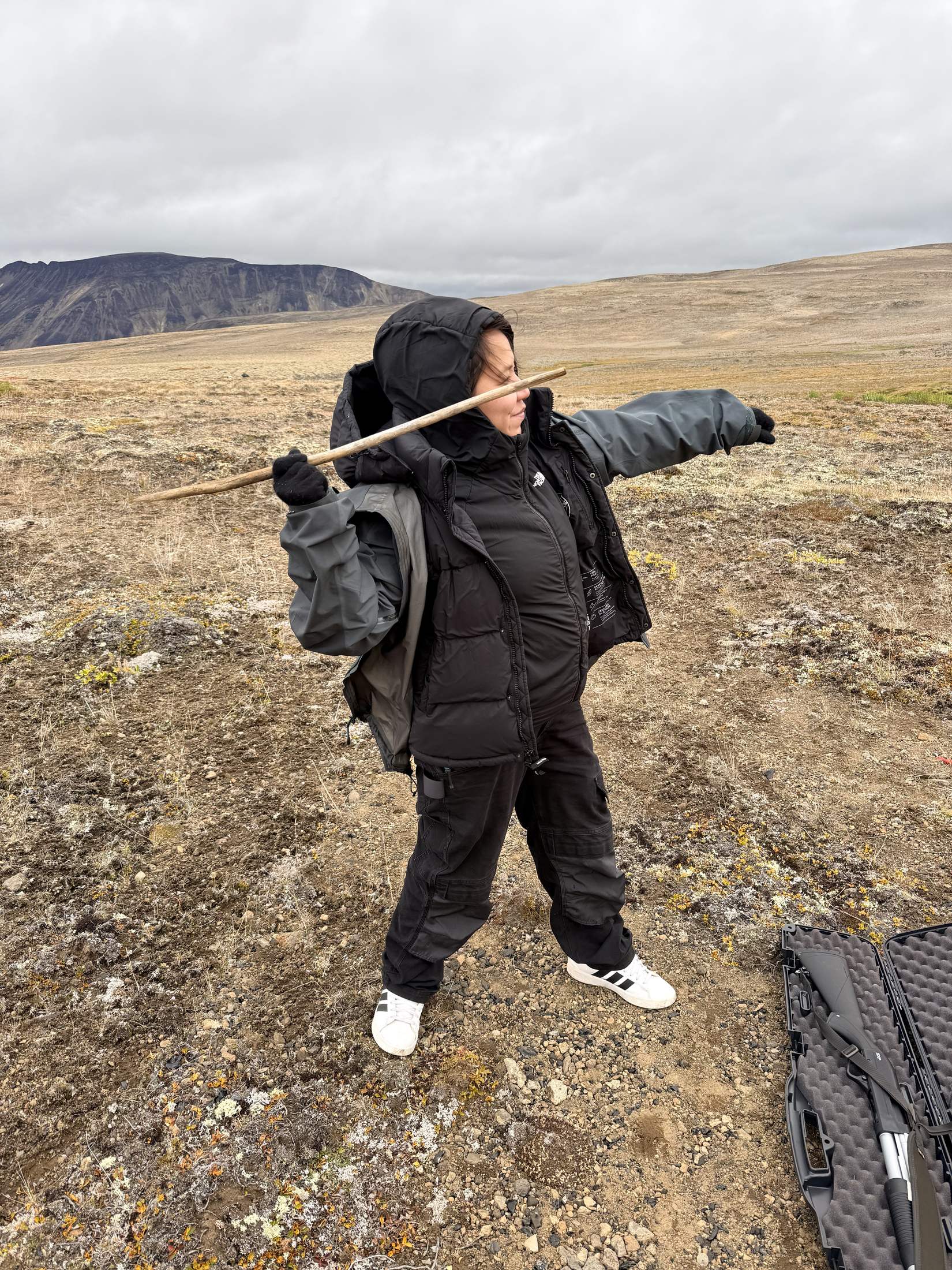
Lesli Louie demonstrates using atlatl fragment found in the melting ice

Kets̱ok (aurora) over Edziza one night from camp.
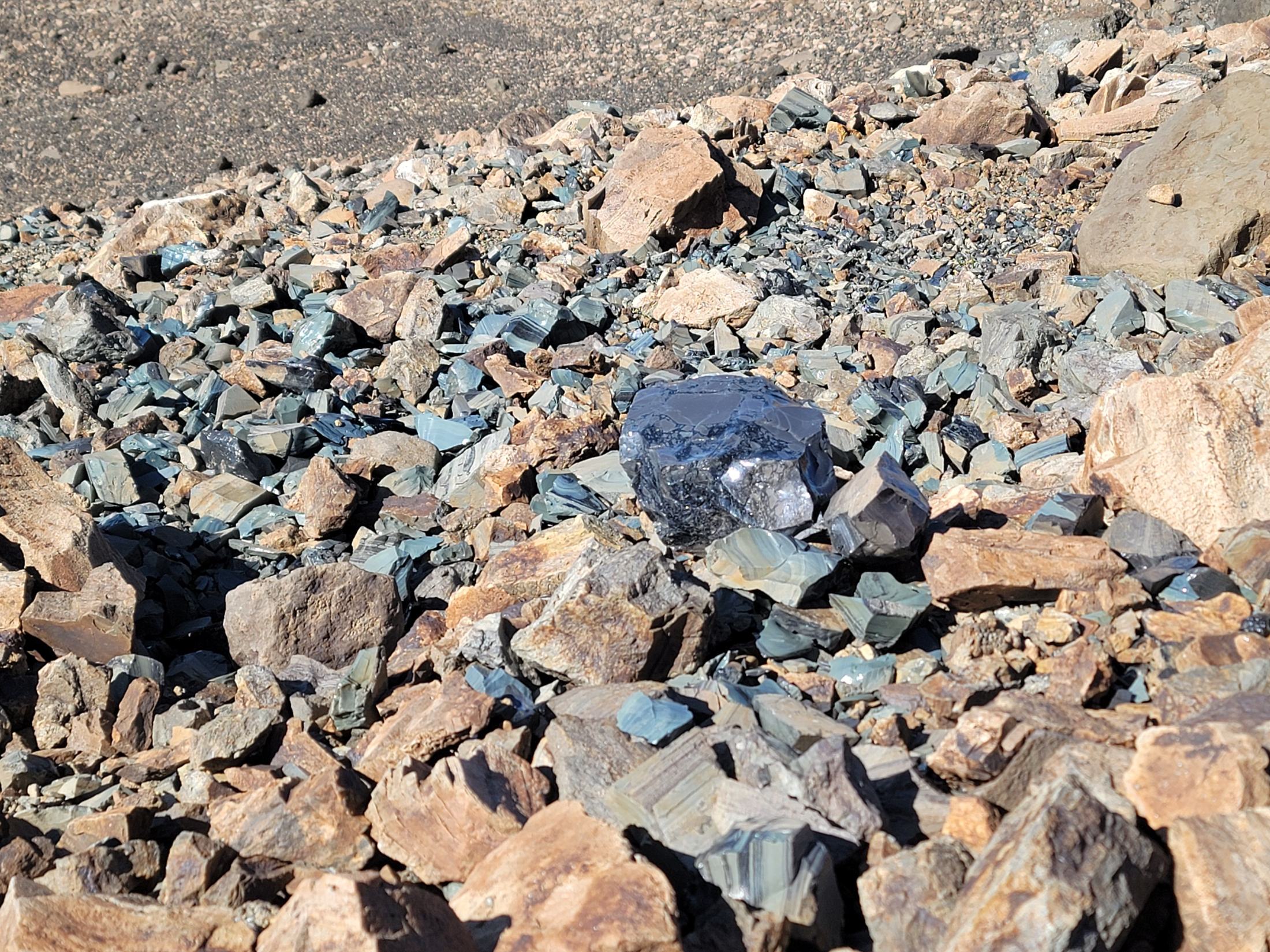
Green dudāt outcrop
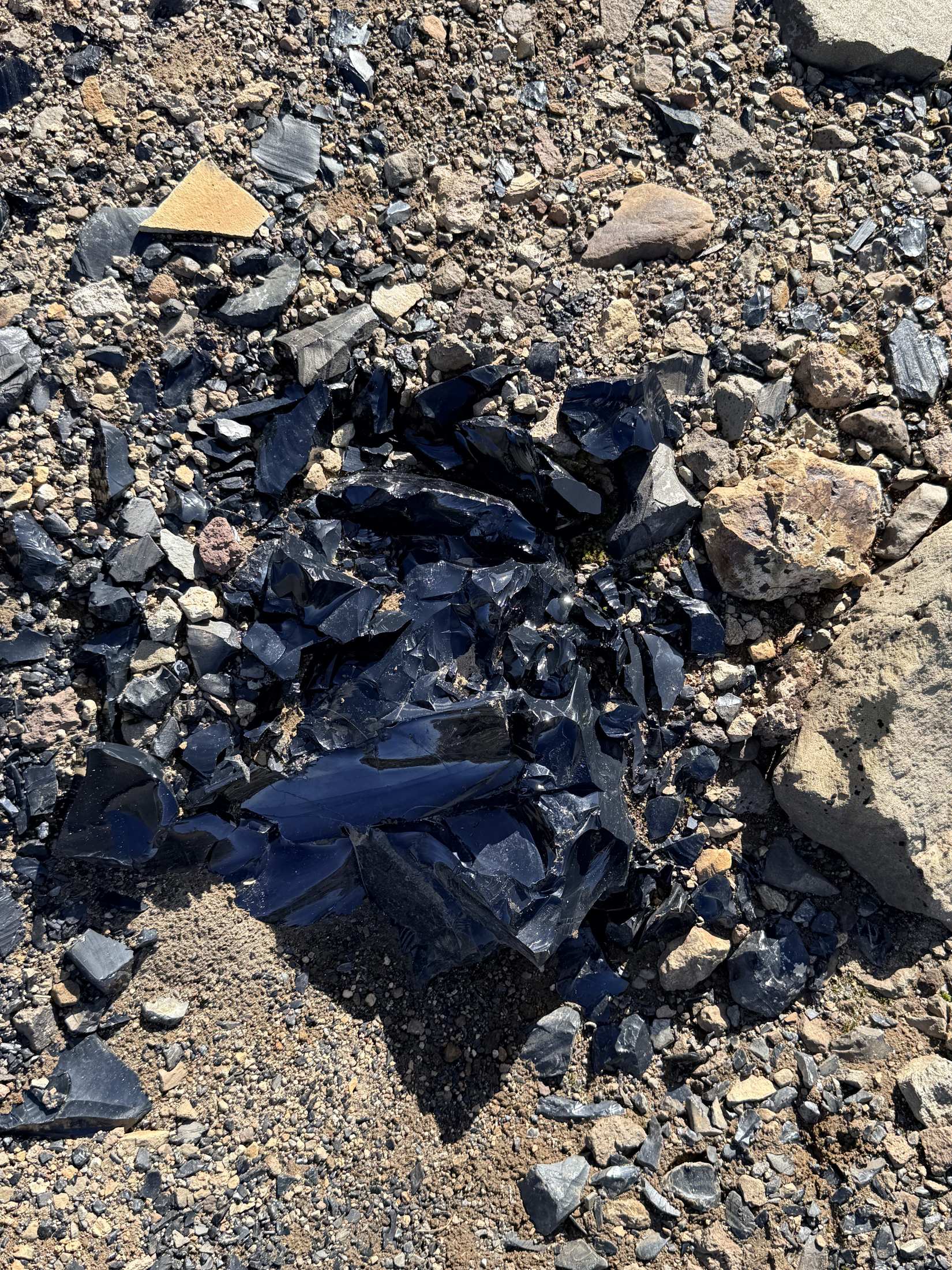
Dudāt
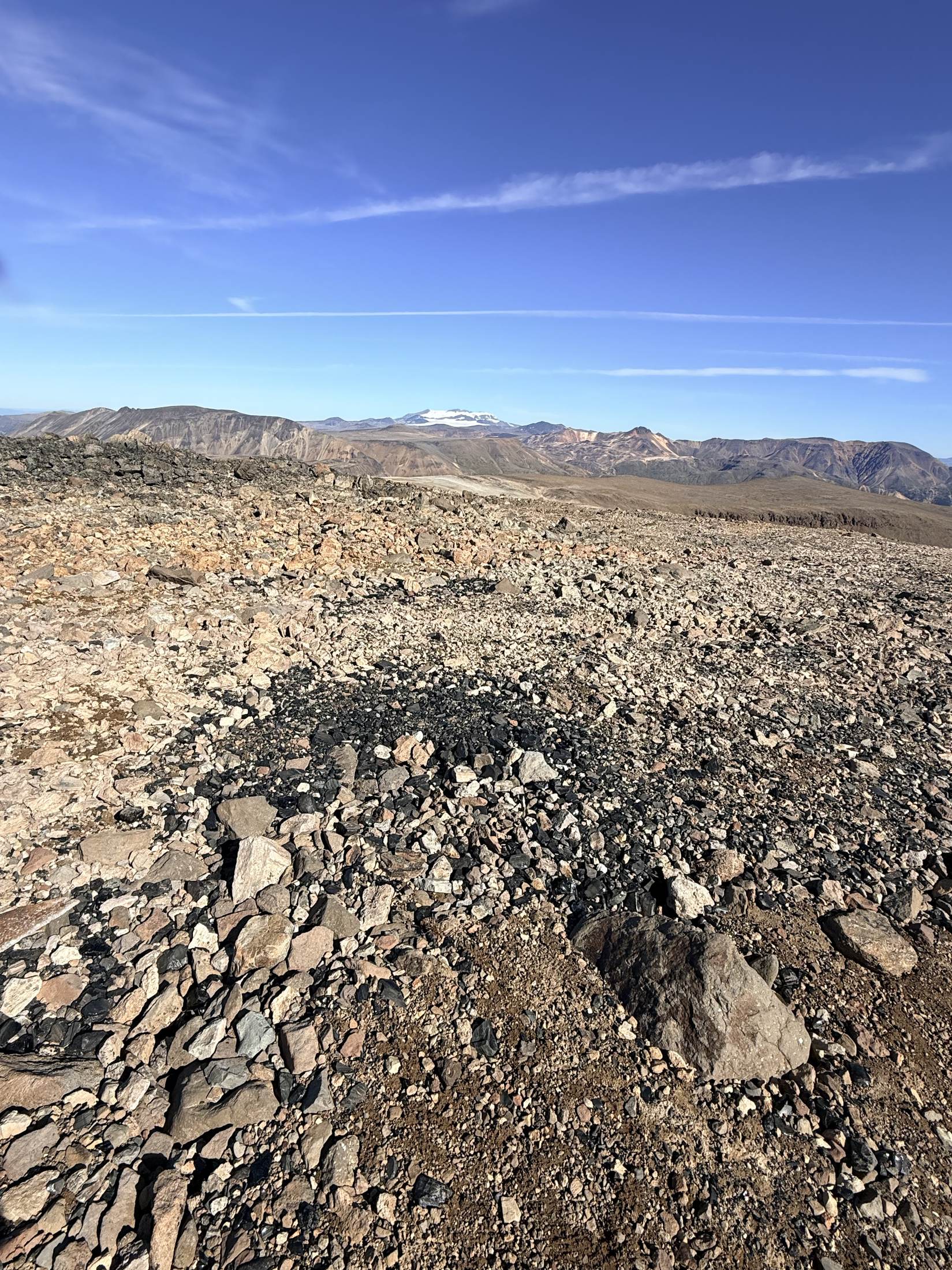
Dudāt work station
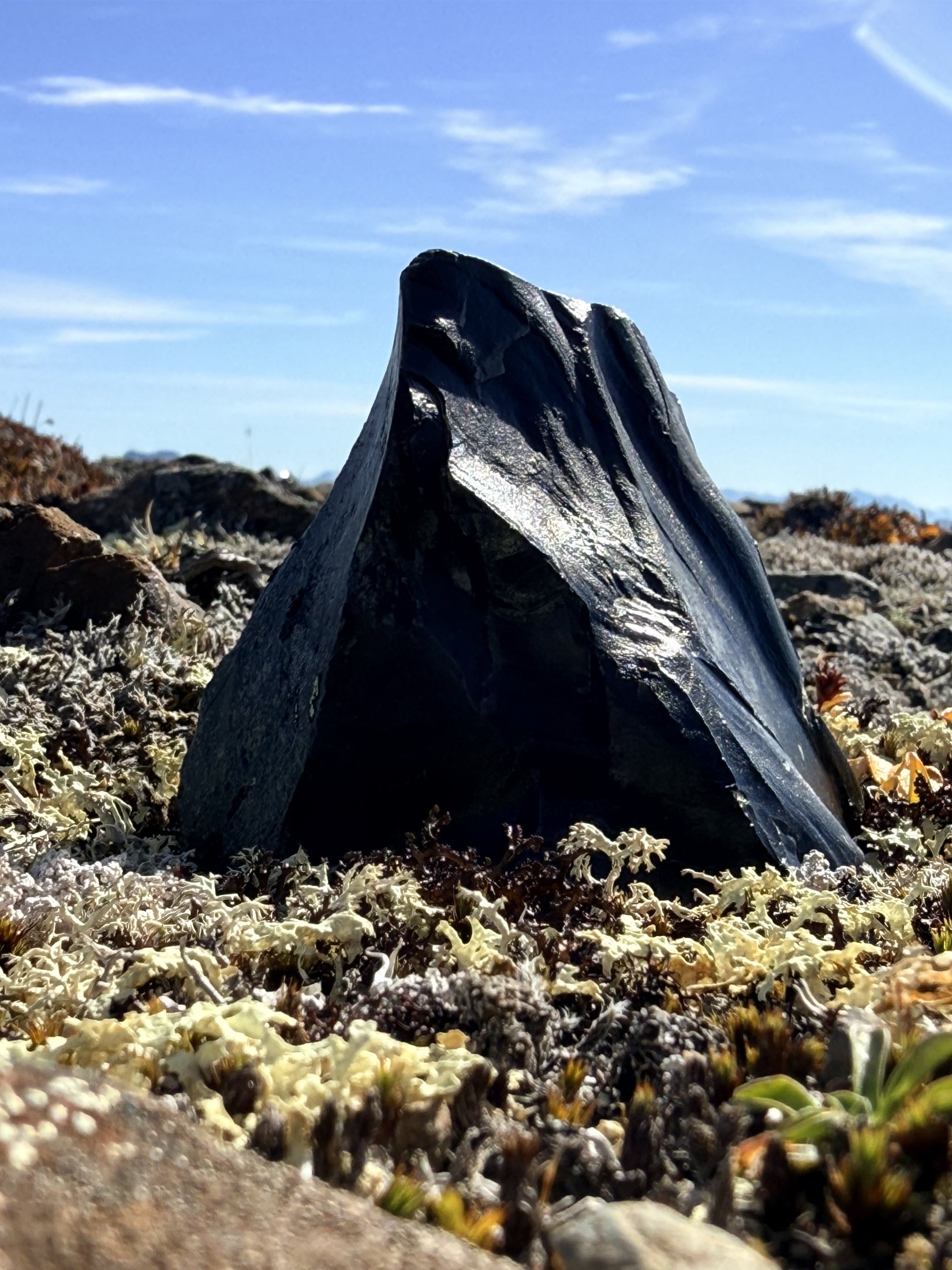
Dudāt boulder
Summer 2024 Field Season
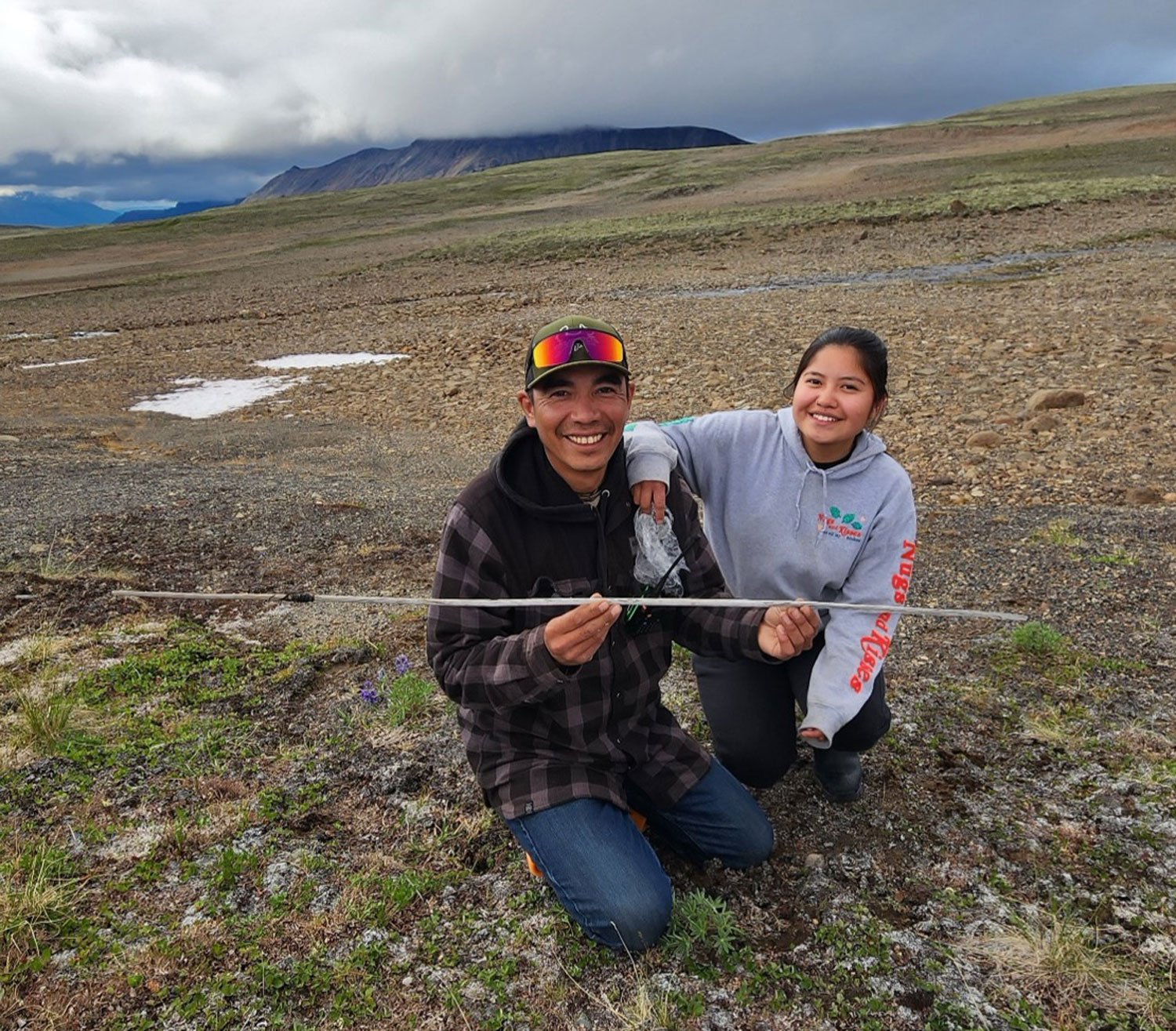
Dennis Quock and Kenzie Dennis holding atlatl dart shaft.
In late July of 2024, TCG sent a field crew of archaeologists Duncan McLaren and Brendan Gray of Cordillera Archaeology Inc., with Dennis Quock and Kenzie Dennis representing Tahltan. Access to the Kitsu Plateau was gained via Tundra Helicopters with pilot Sean Whitford.
They established a field camp and then accessed most of the ice patches on foot from the base camp. On the final day, they conducted a helicopter-assisted survey to ice patches situated near Artifact Ridge and Obsidian Ridge.
The team managed to revisit several ice patches over the five days of field work. They recorded three new ice patch archaeology sites, and found freshly melted perishable artifacts at sites initially recorded on the first expedition in 2019. In addition to millions of obsidian flakes and cores, they found Tes (walking staffs), K’i tudze (birch bark basket) fragments, and objects made from animal bone, antler and skin. The biggest highlight in the 2024 season was their discovery of a wooden atlatl dart shaft with fletching still attached to it.
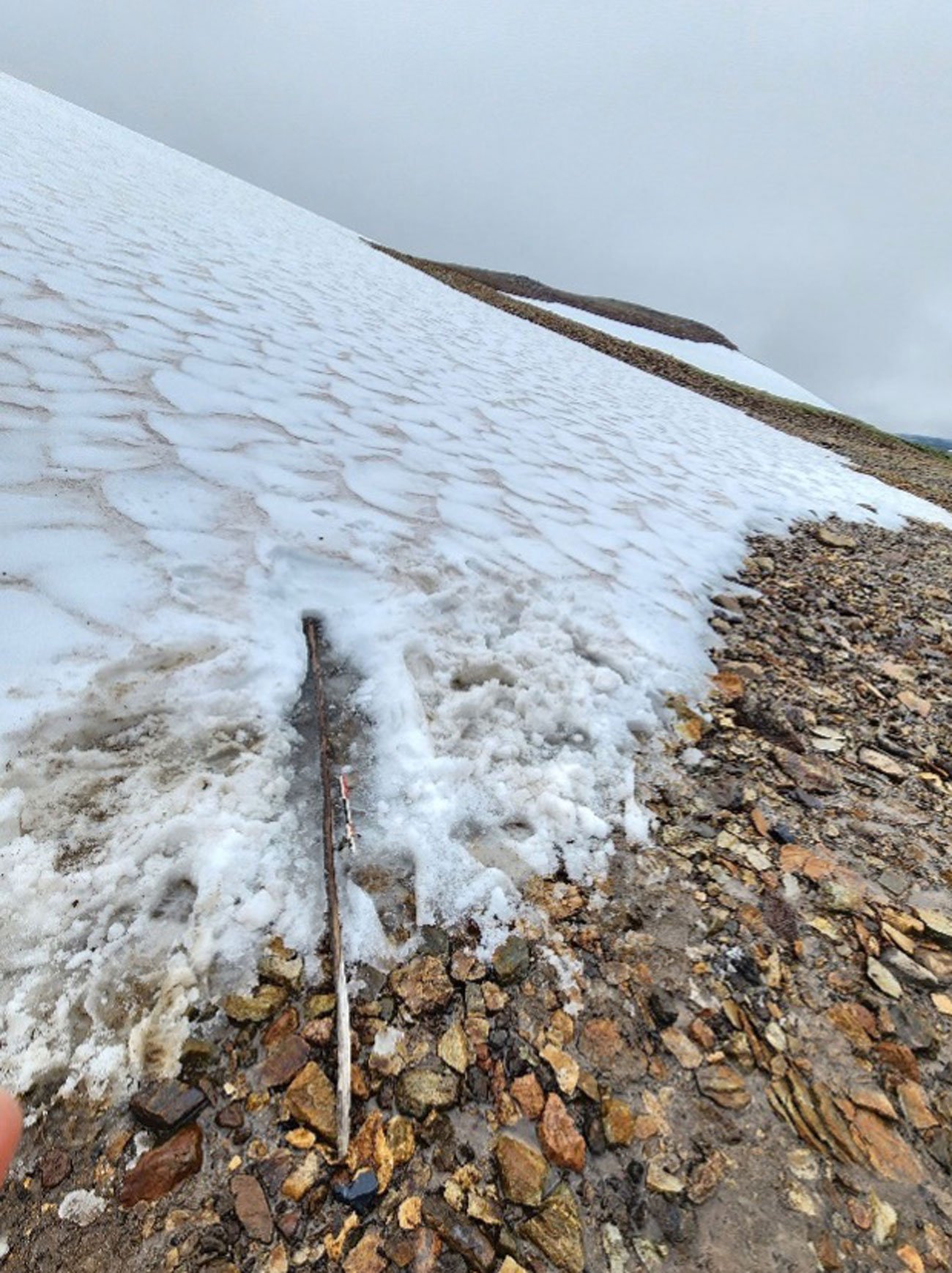
Figure 3. Wooden walking staff found melting out of ice. Note: site is located well above tree line.
This is a piece of ancient hunting equipment. The shaft of a spear was set here, then thrown with an atlatl board or throwing board. While archaeologists often find projectile point tips made of stone, they rarely find the wooden shafts on to which these points were fixed as the wood tends to decay.
2019
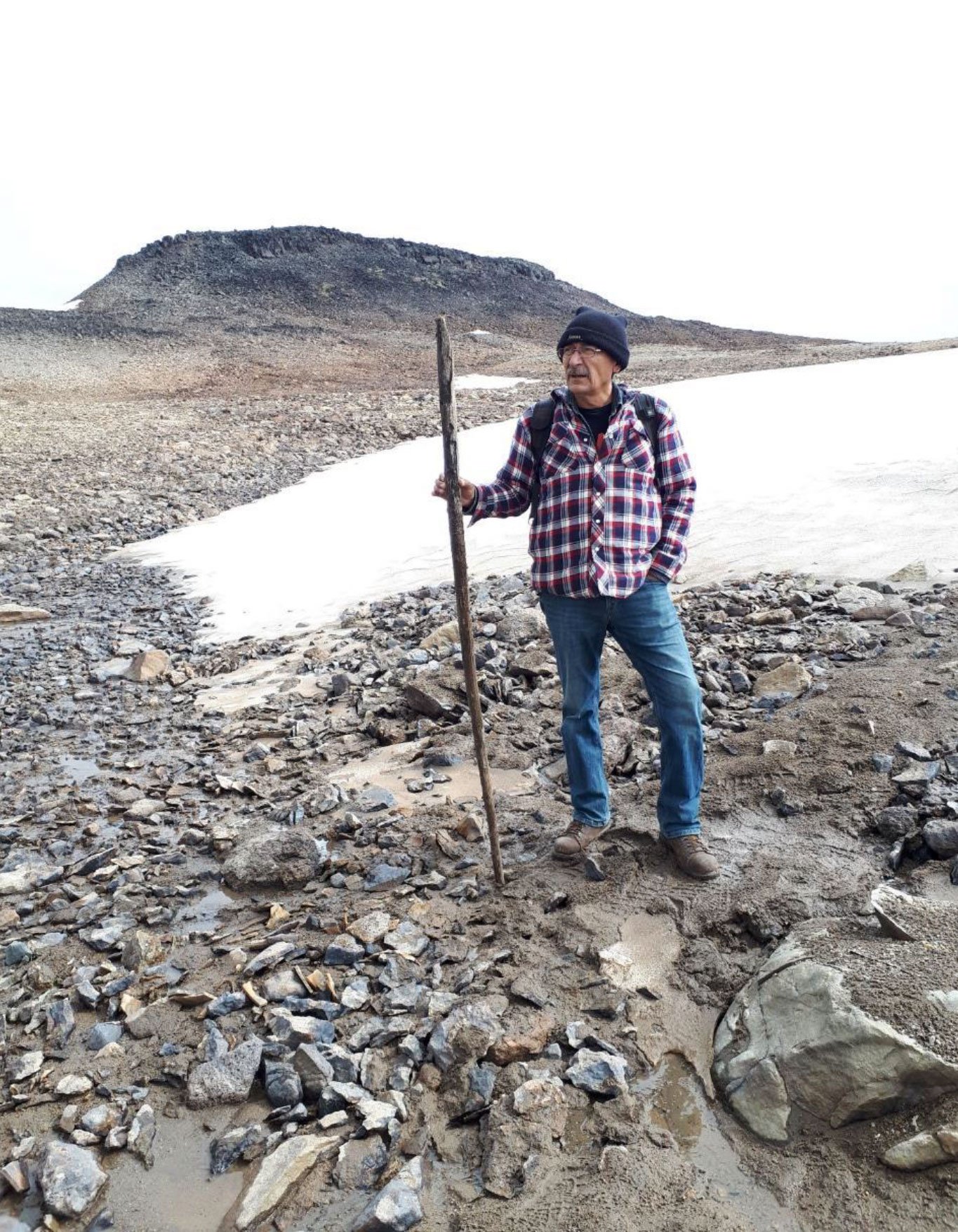
View SE of George Dennis holding wooden walking staff, 2715-2459 years old, found on surface. Ice patch and Goat Mountain Peak in background. Top end of staff is beveled. Photo by D. McLaren.
On the first survey of ice patches around Edzi’dzā’e, the team found over 50 perishable artifacts, including stitched birch bark containers, walking staffs, carved and beveled sticks, an atlatl dart foreshaft and a stitched hide object. Radiocarbon ages on thirteen collected perishable artifacts reveal that they span the last 7,000 years. All of these finds were made against a massive and stunning backdrop of scattered obsidian artifacts: bifaces, cores, flakes and raw material nodules.
The study area was accessed by helicopter from Iskut over four days at the end of July 2019. Low snowpack in the years 2018 and 2019 seem to have contributed to the ice patch retreat. Archaeological survey work identified a total of nine ice patch features around which the perishable artifacts were found. Most artifacts are wood and include birch bark containers, hunting gear and walking staffs. Of the pieces of wood found, most demonstrate evidence of being worked or used, although a few did not. All of these ice patches are situated between 2020 and 1750 m above sea level (asl) and are well above the tree line which is ~1300 m asl on south-facing slopes. Presumably most of this unworked wood was transported to the ice patch areas by people, although some may be the result of a higher treeline in the past.
Animal remains include a stitched hide object, carved antler tools, and various animal bones. Presumably the occurrence of some of the animal bones may be the result of natural rather than cultural factors. However, it should be emphasized that all of these perishable artifacts were found amongst a backdrop of millions of obsidian nodules, flakes, cores, preforms and tools. These were found scattered in every place the team went on the Kitsu Plateau and in the vicinity of Goat Mountain. While it was not their primary goal to inventory this massive quarry, they made occasional notes on particular features of it at 83 geographic locations near or traversing between ice patches.
“In all cases, no perishable materials were found outside a 20 m radius from the edge of the ice.”
The nine ice patches around which artifacts were found seemed to differ. Some were small and not very thick, less than 20 cm. These tended to be situated on gently sloping terrain. Other ice patch features were found on slopes directly below ridges, these often being long and, in some cases, very thick, up to 12 m. Some had vast amounts of sediment within, while others appeared to be clear ice. In most cases, perishable artifacts were found melting out of the lower side of the ice patches, although they did find some on the slope sides, above and within the ice. These sites were found predominately on north and northeastward facing slopes. In all cases, no perishable materials were found outside a 20 m radius from the edge of the ice. This supports the contention that perishable artifacts will decay as the ice patches that contained them shrink.
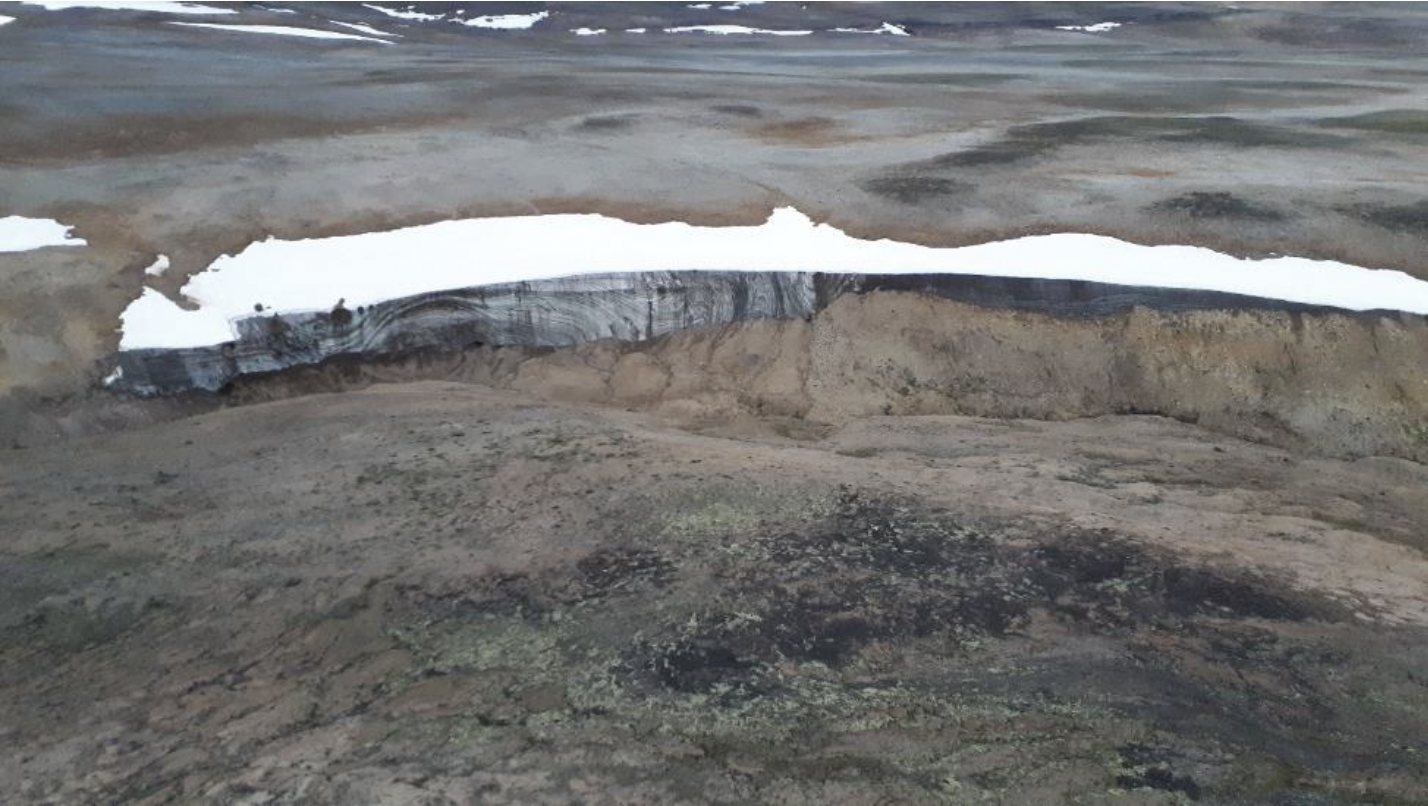
Ice patch study site. Perishable artifacts were only found under the northern and thinner half of the ice patch from the centre of the photo to the right
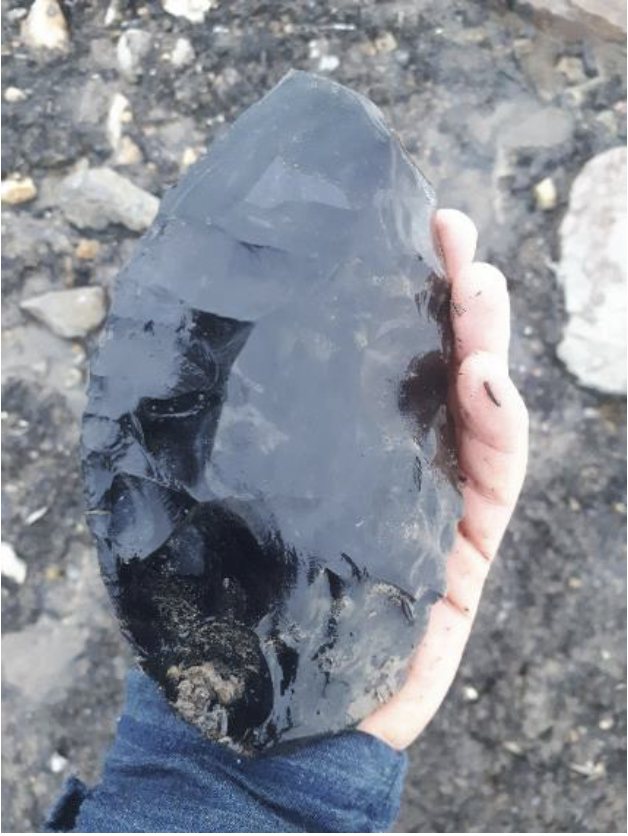
Large dudāt biface. Photo by D McLaren
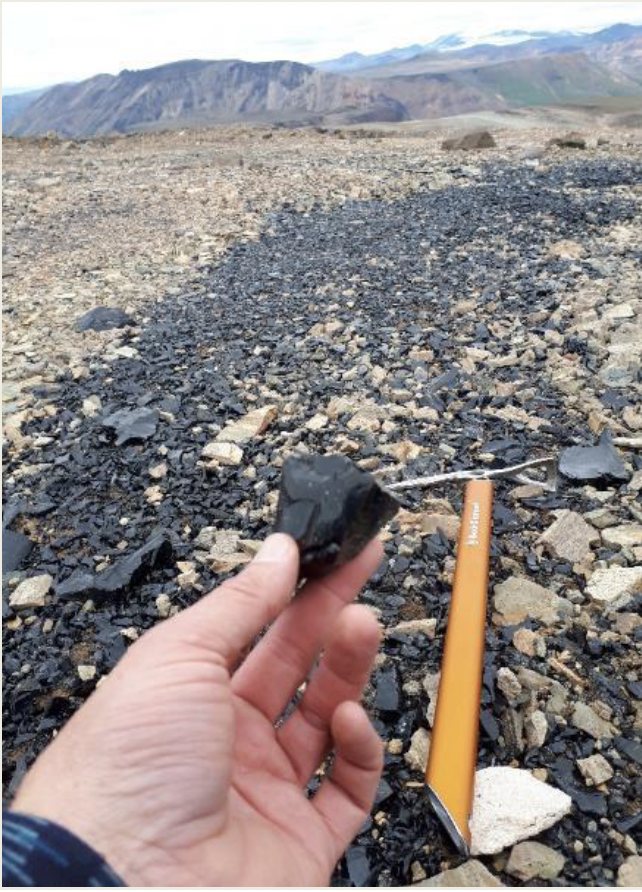
Meltwater path of redeposited dudāt nodules and flakes. Photo by D. McLaren
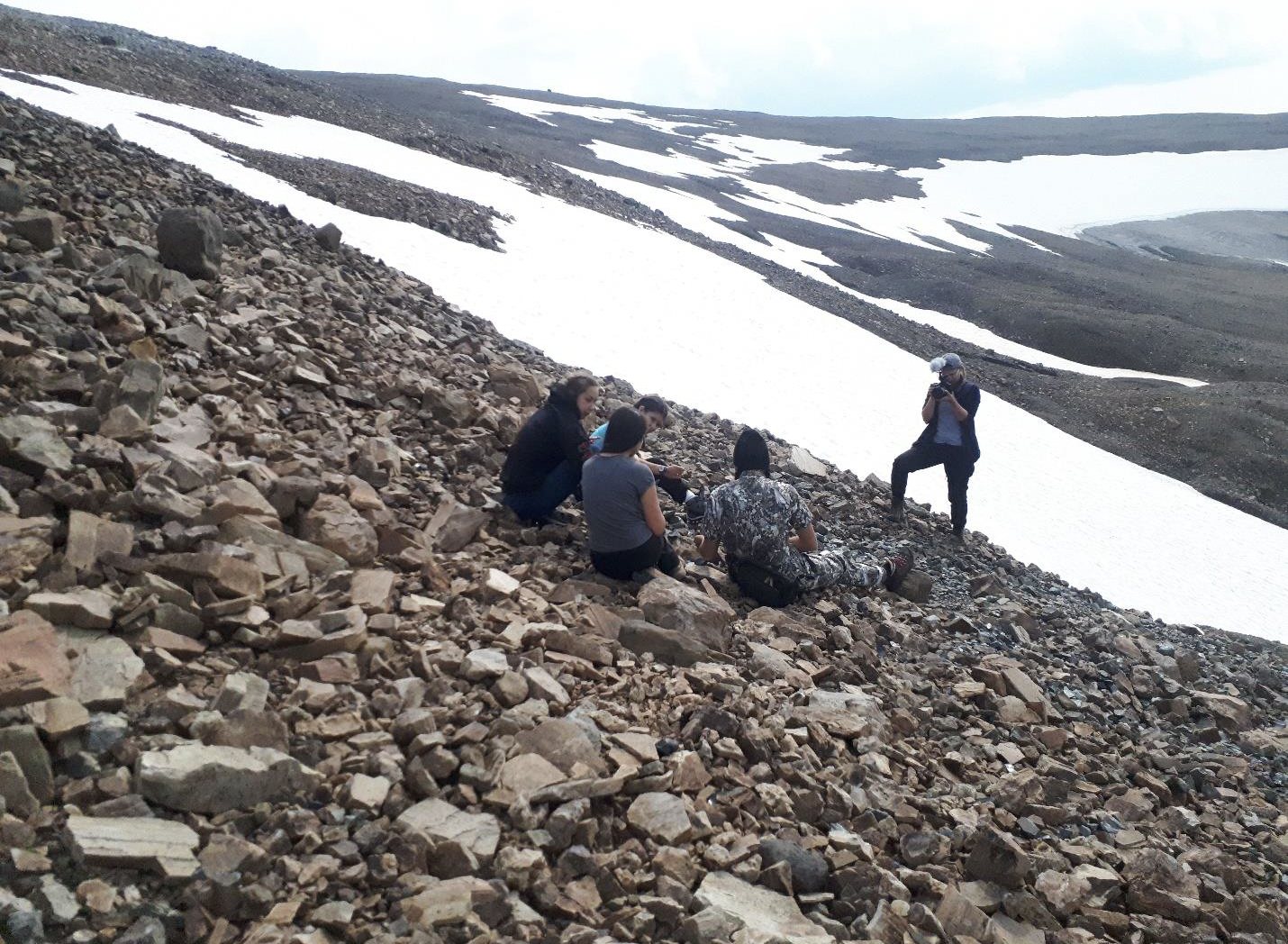
Tene Mehodihi survey and discussion near ice patches on Kitsu plateau
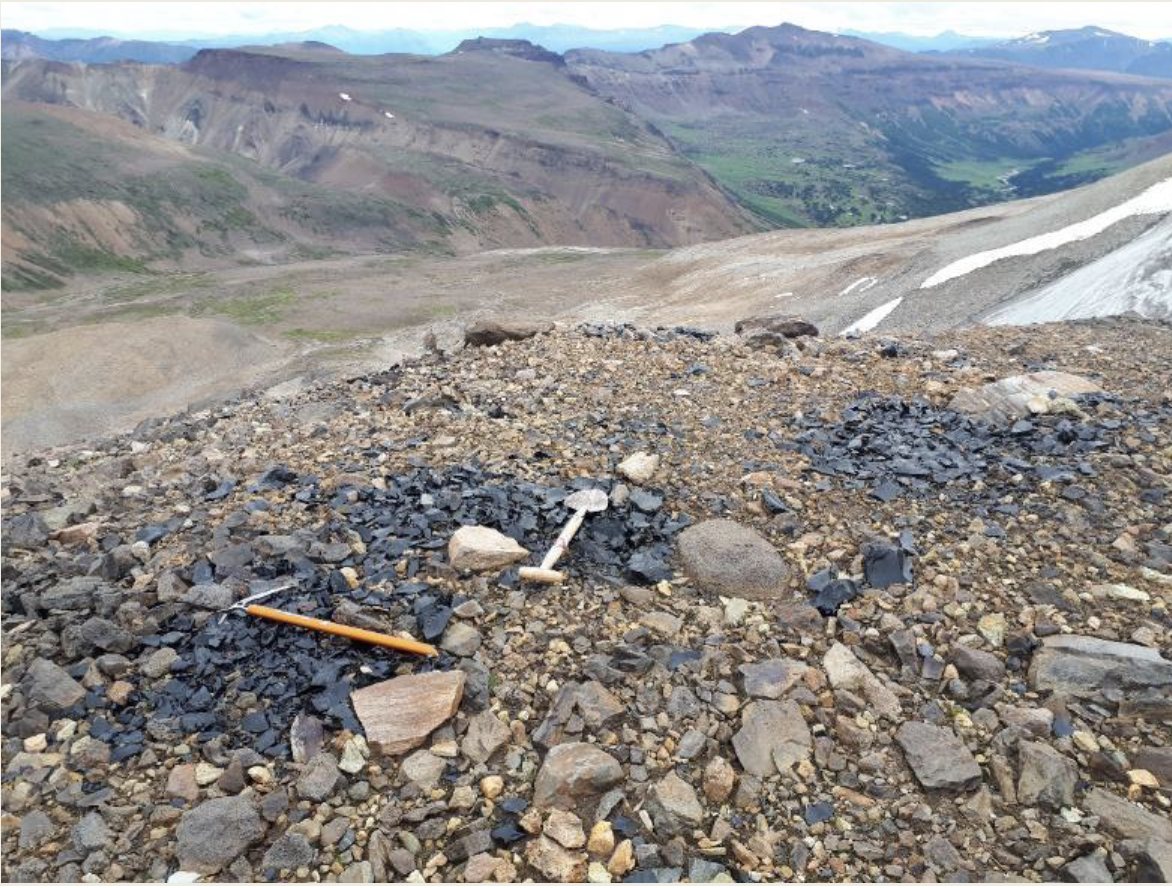
view NE over dudāt work stations and lookout revealed by retreating ice. Photo by D. McLaren
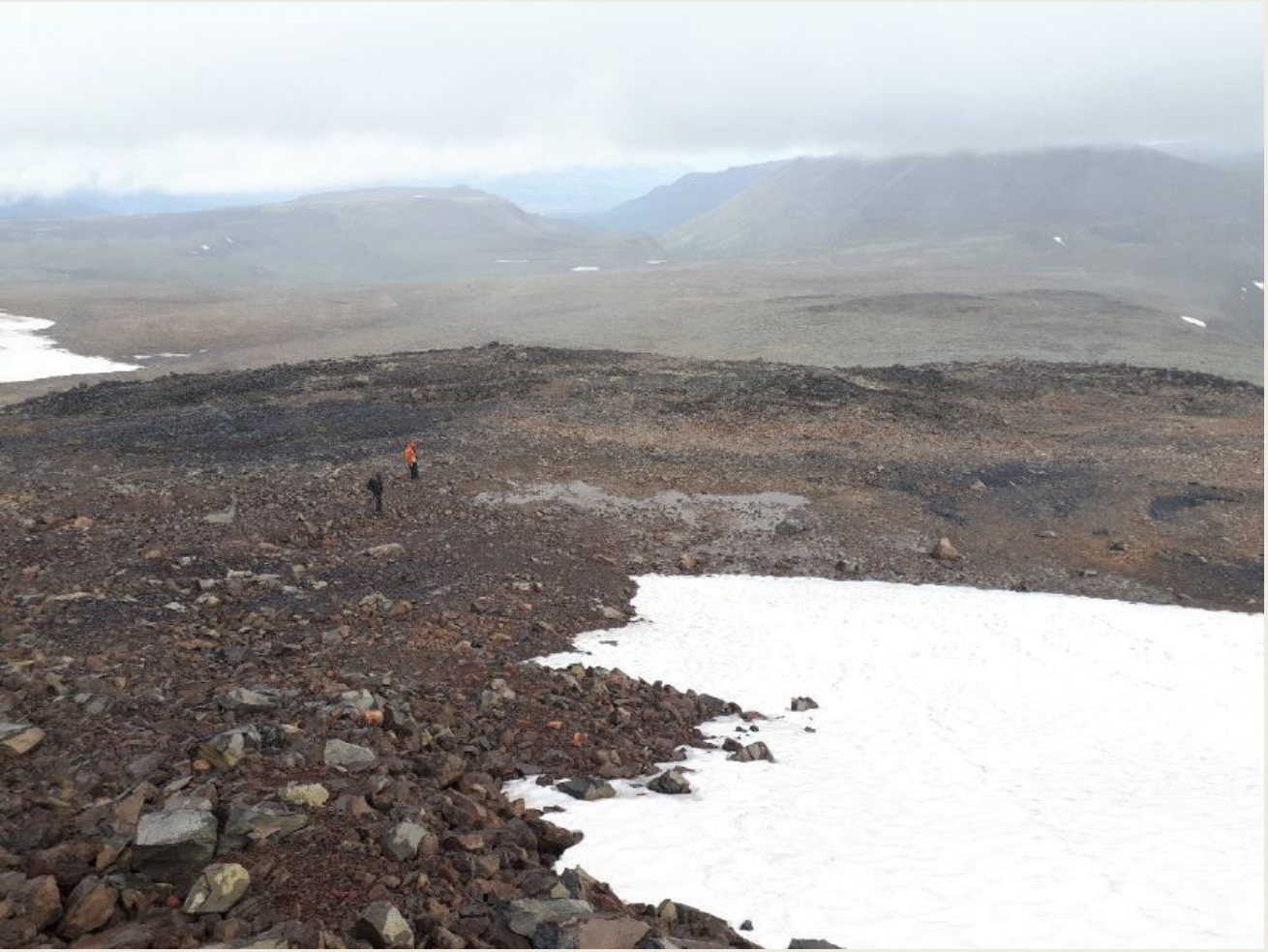
View northwards over melting ice patch. Scatters of black material are primarily composed of obsidian. Photo by D. McLaren
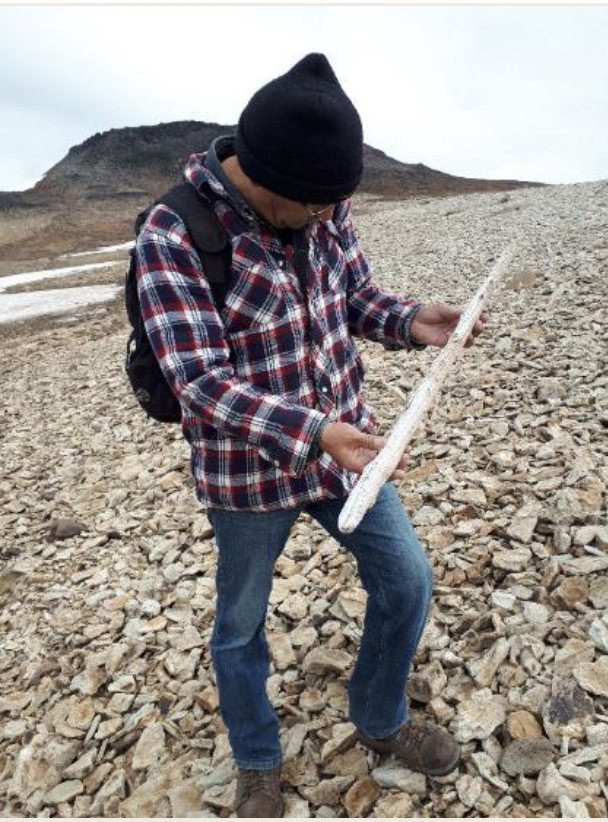
View SE as George Dennis exams wooden staff. This alpine area has no trees
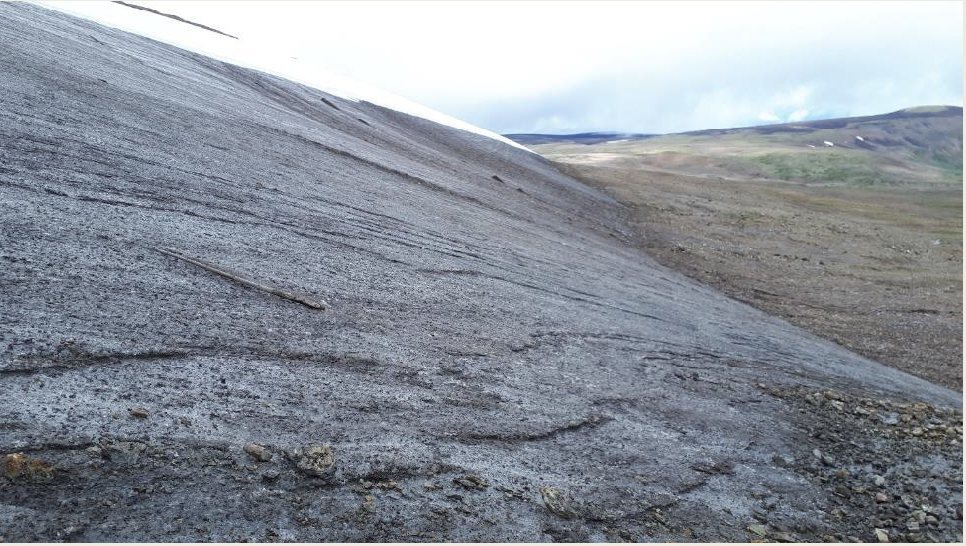
Wooden walking staff on ice dated to 7144-6886 years old. View westwards
Recommendations from the Archaeologists
Ice patch archaeology sites in the jurisdiction of British Columbia are being impacted by climate change and it is clear that there needs to be a Provincial policy to manage these impacts. As it stands right now, the impacts are not being mitigated in an appropriate manner, particularly when one considers the approaches being taken in the Yukon and Northwest Territories.
The ice patch archaeology sites of Mount Edziza Provincial Park are being heavily impacted by climate change and should be managed appropriately as per the British Columbia Heritage Conservation Act. A committee of Tahltan and Provincial stakeholders should be formed to consider whether the obsidian quarries and associated ice patches should be designated an UNESCO World Heritage Site. During years when there is low snow pack and high melt, ice patches in the park should continue to be surveyed and monitored for additional perishable artifacts. Future work in the area should include ice coring or sampling of stratified ice patches for paleoenvironmental investigations. Future archaeological work in the park will benefit from continued collaboration with Tahltan.
Presentation Videos
Alpine Obsidian Quarries and Perishable Artifacts from the Mt. Edziza Volcanic Complex, Canada
The Edziza Ice Patch Work, Central B.C. Canada – Duncan McLaren
Academic Paper
Press
Ice Patch Archaeology Around the World